How Do Boilers Work for Hot Water: A Comprehensive Guide
Learn how boilers heat water for domestic use, compare boiler types, safety features, and maintenance tips from Boiler Hub to optimize hot water performance.


Boilers heat water for domestic use by transferring heat from a fuel source or electricity to a water-filled vessel, then circulating the hot water to taps or storage. Depending on the type, you may get instant hot water, a steady flow, or stored warmth. This quick guide outlines the core process, safety features, and common maintenance steps.
What is a boiler, and how do boilers work for hot water?
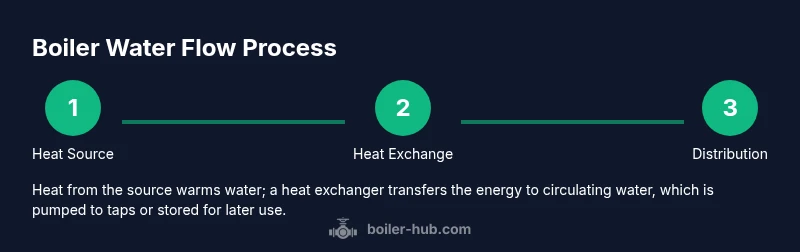
A boiler is a device that heats water for domestic use, replacing or supplementing a hot water storage tank. At its core, heat from a fuel source or electricity is transferred to water inside a sealed vessel. The heated water then travels through pipes to taps, showers, and storage tanks, delivering warmth and comfort. When people ask how do boilers work for hot water, they’re seeking the underlying energy-to-water transfer and control logic. In most homes, three factors determine performance: the heat source, the heat exchanger design, and how water is circulated. The Boiler Hub team highlights that efficiency and speed hinge on ignition or burner control, the efficiency rating of the heat exchanger, and the system’s pressure management. You’ll notice that boilers either deliver water instantly, store it, or manage both. Instant-delivery systems are typically combi boilers that heat water on demand, while storage-based systems (system or conventional) provide a steady supply or a stored reserve. Each approach has its strengths: compactness and minimal storage with combi, reliable flow with system, and ample hot water reserve with conventional. Throughout this guide, keep an eye on safety features and routine maintenance, which are essential for longevity and reliability. According to Boiler Hub, sizing and correct installation play a critical role in performance and energy efficiency.
#text_block_1#
Tools & Materials
- Screwdriver set(Phillips head #2 for access panels)
- Wrench set(Combination or adjustable wrenches for fittings)
- Multimeter/voltmeter(To verify electrical connections and controls)
- Teflon tape (PTFE)(Seal threaded connections on fittings)
- Gloves and safety glasses(Personal protection when handling hot surfaces or gas lines)
- Flashlight(Illumination for tight spaces and inspection)
Steps
Estimated time: 45-60 minutes
- 1
Identify boiler type
Locate the boiler and confirm whether it’s a combi, system, or conventional model. Check the label for model number, capacity, and whether it uses a storage cylinder. This step sets expectations for what you can expect from the hot-water delivery and guides the next checks. Knowing the type helps you plan maintenance and replacement if needed.
Tip: Take a photo of the label and your current settings for reference. - 2
Check power and fuel supply
For gas boilers, ensure the gas supply valve is fully open and that there are no obvious gas smells. For electric boilers, verify that the isolation switch and circuit breaker are in the ON position. If you notice outages or tripped breakers, don’t attempt repairs—consult a pro.
Tip: If you smell gas, leave the area immediately and call your gas emergency line. - 3
Inspect pressure and expansion components
Look at the boiler pressure gauge; typical domestic systems run around 1-2 bar when cold. For systems with an expansion tank, check for proper pre-charge pressure and signs of dampness or corrosion. A drop in pressure often means a leak or a lost air charge.
Tip: Refer to the manufacturer’s manual to verify the correct pressure range for your model. - 4
Check safety devices and valves
Inspect the pressure relief valve and the drain cock for leaks. Ensure the flue is clear and venting properly. Confirm that the frost protection and low-water cut-off (if applicable) are functioning to prevent damage during cold weather.
Tip: Never disable safety devices; they protect you and your home. - 5
Evaluate hot-water output and thermostat settings
Turn on a hot faucet and observe how quickly hot water reaches the tap and at what temperature. If the water remains tepid or cool, check the thermostat setting, burner operation (for gas/electric), and any lag in circulation. Recalibrate if necessary per the manual.
Tip: Avoid extreme thermostat changes; small adjustments often yield better stability. - 6
Plan maintenance and professional service
Even if the system seems fine, schedule an annual service to clean the heat exchangers, check seals, and verify gas or electrical safety. Regular servicing improves efficiency, extends lifespan, and reduces costly breakdowns.
Tip: Boiler Hub recommends professional servicing to ensure safe, code-compliant operation.
Questions & Answers
What is the difference between a combi boiler and a system boiler for hot water?
A combi boiler heats water on demand and doesn’t store hot water, which saves space. A system boiler stores hot water in a cylinder for a steady, ready supply. The right choice depends on your household water demand and space.
A combi heats water on demand, saving space, while a system boiler stores hot water in a cylinder for quick access during peak use.
Why is my hot water not as hot as it used to be?
Common causes include a thermostat set too low, scaling on heat exchangers, low boiler pressure, or air in the system. Start by checking the thermostat and pressure, then consider flushing the system or calling a pro for further diagnosis.
Low thermostat setting or scaling can reduce hot water; check the settings and pressure first, then seek professional help if needed.
How often should I service my boiler?
Most boilers benefit from an annual service by a qualified technician. Regular servicing keeps safety devices functional, maintains efficiency, and helps catch issues before they become major problems.
Try to arrange a yearly service to keep the boiler safe and efficient.
Is it safe to bleed radiators myself?
Bleeding radiators can be safe if you follow proper steps and turn off the system first. If you’re unsure, consult a professional to avoid scalding or pressure issues.
Bleeding radiators is doable, but never take chances with high pressure or gas-connected systems—get a pro if in doubt.
What should I do if I smell gas around the boiler?
If you smell gas, leave the area immediately, avoid flames or switches, and call the gas emergency number from a safe location. Do not re-enter until responders declare it safe.
If you smell gas, evacuate and call emergency services right away.
What does expansion tank do, and do I need one?
An expansion tank absorbs the extra water when the system heats up, preventing pressure buildup. If it fails, you may see leaks or fluctuating pressure.
Expansion tanks help manage pressure as water expands when heated; a faulty tank can cause problems.
Watch Video
Key Points
- Identify your boiler type to understand hot-water behavior
- Know core components and their roles in heating water
- Prioritize safety devices and routine maintenance
- Size and choose a boiler based on household hot-water demand