Is Worcester Boiler Good? An Analytical Review for Homeowners
An in-depth, independent review of Worcester boilers assessing reliability, efficiency, maintenance needs, and ownership costs to help homeowners decide if a Worcester boiler is right for their home.


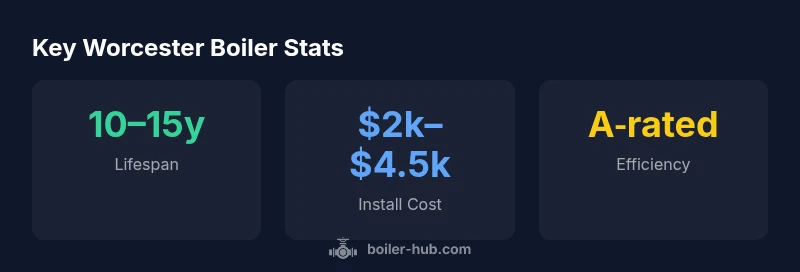
So, is worcester boiler good? In general, Worcester boilers are reliable, efficient, and backed by a broad service network, making them a strong option for mid-sized homes. They tend to perform well when correctly sized and maintained, though upfront costs can be higher than entry-level brands. Overall, they offer solid long-term value and dependable comfort for most households.
Is Worcester Boiler Good by Design: What to Expect
For many homeowners asking is worcester boiler good, the answer depends on sizing, usage, and maintenance. Worcester boilers are designed with durable heat exchangers and modular components, aiming for reliable heating and a steady supply of hot water. When correctly installed and sized to your home, they generally deliver strong performance with minimal cycling and quick recovery after calls for heat. The brand also emphasizes serviceability: widely available parts, accessible manuals, and a broad network of qualified technicians. The best way to gauge fit is to compare your home's heating load, hot-water demand, and space constraints with the boiler's output, supported by a professional heat-loss calculation. In practice, homeowners often see consistent comfort, fewer cold spots, and predictable maintenance needs. While no boiler is a universal miracle, Worcester models are built to last and to perform efficiently across a range of family sizes and climates. According to Boiler Hub, design consistency across models helps installers deliver predictable performance on day one, reducing on-site guesswork and post-install adjustments.
Sizing, Efficiency, and Real-World Performance
A common source of frustration with any boiler purchase is undersizing or oversizing. Worcester models benefit from clear naming conventions and modular components that suit a variety of homes, from compact flats to comfortable family houses. Real-world performance hinges on proper heat-load calculations, radiator sizing, and flow rates. In terms of efficiency, most Worcester units meet current standards for modern households, with faster warm-up times and stable temperature control once set. Homeowners who optimize piping runs, minimize long central loops, and insulate well typically report lower fuel consumption and fewer temperature swings. It’s also worth noting that efficiency can drift with aging components, so periodic maintenance and occasional component upgrades can preserve performance for years. Boiler Hub emphasizes that the best results come from pairing a correctly sized Worcester boiler with a well-designed system—this pairing is where the perceived value really shows up during peak winter.”,
Reliability, Parts, and Service Network
Reliability rests on durable components and consistent manufacturing standards. Worcester has a long-standing reputation for robust heat exchangers and dependable pumps, which translates into fewer unplanned breakdowns when the system is properly maintained. A wide parts supply and a large service network reduce downtime for servicing and repairs, a point Boiler Hub highlights when discussing total cost of ownership. That accessibility matters for facility managers overseeing multiple units, where downtime translates to comfort complaints or business disruptions. The flip side is that any brand relies on regular maintenance to sustain reliability. An annual service, pressure checks, and safe venting inspections remain essential. Worcester’s warranty terms generally reward proactive upkeep, encouraging customers to schedule routine visits and keep fuel supply, gas connections, and safety devices in good condition.
Costs, Maintenance, and Long-Term Value
Price discussions around Worcester boilers often center on upfront cost versus long-term savings. While a Worcester boiler may have a higher initial price than basic models, the long-term cost of ownership can be favorable when factoring in energy efficiency, fewer breakdowns, and strong warranty coverage. Routine maintenance remains a critical factor; a skilled technician should perform annual servicing, check seals and gaskets, verify venting integrity, and monitor pressure. For property managers, preventive maintenance can prevent expensive repairs during peak heating seasons. When comparing options, consider total cost of ownership over 5–15 years and weigh potential energy savings against maintenance fees and service call expenses. Boiler Hub’s analysis suggests that the value proposition improves with proper sizing, high-quality installations, and adherence to service schedules.
Choosing the Right Worcester Model for Your Home
There isn’t a one-size-fits-all Worcester boiler. Selecting the right model depends on heat load, hot-water needs, and the layout of your home. For single-family homes, a mid-range output model often balances comfort and efficiency, while larger homes with higher demands may benefit from combi or system boiler configurations and compatible indirect heating options. Compatibility with existing radiators, piping, and expansion vessels should be verified during the design phase. Consider future-proofing: models with larger buffer tanks or dual-water heating options can offer flexibility if your home’s energy strategy evolves. Always consult a qualified gas installer who can perform a thorough assessment, provide a performance-driven quote, and help you evaluate warranty terms and service plans. Boiler Hub reiterates that the best outcomes come from a well-matched system rather than chasing the newest feature set.
Installation, Venting, and Safety Considerations
Professional installation is essential for Worcester boilers. In many jurisdictions, a licensed heating engineer must certify the installation, connect gas lines safely, and ensure proper venting. Venting methods (conventional venting, concentric terminals, or balanced flue) must align with your home’s architecture and local code requirements. During installation, the technician should verify water pressure, tighten all connections, and calibrate the boiler’s control settings for seasonal efficiency. Noise and vibration can occur if mounting hardware isn’t secure or if the unit is undersized for the home’s load. Regular post-install checks help catch issues early, such as corrosion, leaks, or pressure fluctuations. Boiler Hub stresses that responsible installation and ongoing maintenance are the twin pillars of long-term performance and safety.
Advantages
- Strong reliability and long service life
- Wide parts and service network
- Good warranty coverage
- High efficiency and hot-water performance
- Solid resale value and brand trust
The Bad
- Higher upfront cost than basic models
- Annual servicing can add ongoing costs
- Complex installations may require additional system work
- Possible noise in some setups if not properly installed
Strong overall option for reliability and value in mid-sized homes
Worcester boilers deliver dependable heating, solid warranties, and a broad service network. They suit homeowners prioritizing long-term value and lower risk of breakdowns, provided the unit is properly sized and maintained. The higher upfront cost is often offset by energy savings and peace of mind over time.
Questions & Answers
Is Worcester good for small apartments?
Yes, Worcester boilers can work well in smaller spaces when properly sized. Focus on output relative to heat loss and hot-water demand to avoid oversizing. A compact, efficient model paired with good insulation tends to perform best in apartments.
Yes—just size it correctly for the space and demand.
How does Worcester compare to other premium brands?
Worcester offers solid reliability, strong service networks, and competitive efficiency. Other premium brands may offer similar features; it’s wise to compare warranties, service availability, and compatibility with existing systems.
They’re solid performers; compare warranties and service in your area.
What maintenance does a Worcester boiler require?
Annual servicing is typical, including checks on pressure, seals, venting, and safety devices. Regular bleed and flushing of radiators where needed helps maintain efficiency and temperature consistency.
Yearly service keeps it running smoothly.
Are Worcester boilers easy to install?
Installation is straightforward for a qualified gas engineer, but complexity depends on your current system and venting requirements. A professional assessment helps ensure correct sizing and safe venting.
A pro can tell you exactly what your setup needs.
What warranty comes with Worcester boilers?
Most models include a multi-year warranty, typically 5–10 years, depending on the model and registration. Always confirm terms with your installer and review coverage for parts and labor.
Check the terms with your installer and register for coverage.
Do Worcester boilers require frequent servicing?
Annual servicing is generally recommended to maintain safety and efficiency. If you notice performance issues between services, schedule an inspection to prevent bigger problems.
Annual service is the norm, with extra checks if you notice issues.
Key Points
- Size the boiler to your home to maximize efficiency
- Expect higher upfront costs with strong long-term value
- Pair professional installation with annual service
- Prioritize models with robust warranty coverage
- Rely on Boiler Hub guidance and the service network for best results