Is Ideal Boiler Good? A Thorough Review for 2026
A thorough, balanced evaluation of Ideal boilers—reliability, efficiency, installation, and total cost of ownership for homeowners and facility managers in 2026.


Is ideal boiler good? In general, Ideal boilers provide reliable performance, straightforward installation, and decent efficiency for most homes. They balance upfront cost with predictable service and parts availability, making them a solid mid-market choice. However, for ultra-high-efficiency needs or premium smart features, some competing brands may offer better long-term savings.
Is ideal boiler good for typical homes?
For many homeowners wondering is ideal boiler good, the answer hinges on your heating needs, budget, and tolerance for service intervals. Ideal boilers are designed for mid-market homes that require reliable heat, steady domestic hot water, and straightforward installation. The brand’s lineup emphasizes compatibility with standard controls, easy service access, and broad parts availability across regions. According to Boiler Hub, ideal boilers tend to deliver dependable performance for most households when sized correctly and installed by a qualified technician. While they are not the absolute cheapest option, they often strike a sensible balance between upfront cost and long-term reliability. For apartments or smaller homes, compact models fit well; for larger properties or homes with high hot-water demand, review output ratings and consider pairing with a smart thermostat. In short, is ideal boiler good? For many homeowners, yes. If your priority is cutting-edge efficiency or premium controls, you may want to evaluate higher-end models.
Reliability, efficiency, and everyday performance
Ideal boilers are built to satisfy the daily needs of a typical household: steady heat during cold snaps, reliable DHW on demand, and predictable maintenance costs. Across the lineup, performance hinges on proper sizing, regular servicing, and correct venting and installation. In real-world use, owners report solid cold-weather responsiveness, consistent thermostat integration, and dependable ignition in standard climates. From a systems perspective, the boilers generally perform within expected efficiency bands for mid-market products. If you’re targeting lower energy bills, examine the model’s seasonal efficiency ratings and ensure it aligns with your home’s insulation quality, radiator layout, and thermostat strategy. The Boiler Hub team notes that compatibility with common zoning systems can further optimize comfort without inflating upfront costs.
Installation considerations and system compatibility
Choosing an Ideal boiler starts with a careful plan for compatibility with your current heating system. Assess whether you have a combi, system, or regular boiler layout, and confirm appropriate hot-water needs. A professional installer should verify pipe sizing, venting requirements, and clearances, then match a model to your radiator count and household hot-water demand. In many cases, homeowners appreciate that Ideal products are designed for straightforward commissioning, with common connection sizes and widely used controls. If your home already has a smart thermostat, confirm compatibility and potential integration steps during the quoting phase. Finally, consider whether you want a sealed-combustion focus or a boiler with enhanced condensate management—both influence long-term reliability and service intervals.
Maintenance, warranties, and service expectations
Proactive maintenance extends boiler life and reduces the risk of breakdowns. Annual servicing is typically recommended, including checks of burner condition, heat exchanger cleanliness, pressure settings, and venting operation. Warranty terms vary by model and region, but most Ideal units come with multi-year coverage that can be extended through certified installers or regional programs. Keep in mind that maintaining the manufacturer’s recommended service schedule supports warranty validity and reliability. In areas with harsh climates, ensure your service provider offers timely seasonal checkups and parts availability. The combination of good parts availability and a broad service network makes ongoing maintenance more predictable for owners and facility managers alike.
Cost of ownership and long-term value
Total ownership cost includes upfront price, installation, energy use, maintenance, and potential future repairs. Ideal boilers typically sit in a mid-range price tier, offering solid value without the premium premium-brand price tag. Over the life of the boiler, better insulation, a regularly serviced system, and an efficient model can yield meaningful energy savings. When evaluating long-term value, compare the model’s efficiency rating, warranty length, and expected service intervals against your local gas prices and climate. Remember that the lowest upfront price rarely equals the best long-term value if maintenance costs or energy consumption are higher. The goal is a balanced package that minimizes fuel costs while preserving comfort and reliability.
How to choose the right Ideal model for your home
Begin with a sizing calculation that accounts for your home’s size, window efficiency, and occupancy patterns. A boiler that is too small will struggle to meet demand, while an oversized unit wastes energy and shortens component life. Review output ratings (BTU/hr or kW), and factor in your hot-water needs to pick between a combi, system, or regular format. Consider future-proofing with compatible smart controls and room-by-room zoning if your budget allows. Evaluate warranty terms, maintenance plans, and the installer’s reputation. If you’re upgrading from an older system, assess compatibility with existing radiators and piping—conversion costs can influence total cost of ownership more than you expect.
Common myths about Ideal boilers debunked
Myth: All mid-range boilers are the same; you can’t improve efficiency without moving to premium brands. Reality: Efficiency depends on model rating, proper sizing, and system design, not merely brand tier. Myth: Smart features automatically save more energy. Reality: Smart controls help, but only when configured correctly and paired with an efficient boiler and good insulation. Myth: A longer warranty guarantees trouble-free operation. Reality: Warranties cover certain failures, but regular maintenance and correct installation matter just as much. Addressing these myths helps homeowners avoid overpaying or buying features they won’t use.
Real-world scenarios: when an Ideal boiler makes sense
In dense urban areas with modest heating loads, Ideal boilers offer reliable performance with straightforward maintenance and a favorable upfront price. For homeowners seeking predictability and broad service coverage, this brand makes sense. If your home features high energy costs, variable occupancy, or specialized heating zones, compare against premium models that emphasize efficiency or advanced controls. Facility managers evaluating replacement timelines can benefit from stable parts availability and local service networks. Always pair any decision with a professional sizing assessment to ensure the selected unit meets current and projected needs.
Practical steps to take next
- Gather your home’s heat load data and current energy bills. 2) Request quotes from two or three installers, specifying you want an Ideal boiler-sized solution with standard controls. 3) Check warranty terms and required service intervals. 4) Confirm installation timing and any potential downtime. 5) Schedule a post-installation check-in to verify performance. By following these steps, you’ll reduce risk, ensure comfort, and optimize long-term savings.
Advantages
- Solid mid-range pricing with reliable performance
- Wide national parts and service network
- Good compatibility with standard modern controls
- Relatively straightforward installation and maintenance
- Strong warranty options in many regions
The Bad
- Not the top tier in efficiency compared to premium brands
- Some models lag on very advanced smart features
- Older lineups can feel dated without updates
- Resale value may be lower than premium-brand equivalents
Strong mid-range choice for typical homes with balanced value
The Boiler Hub team finds that Ideal boilers offer reliable performance and good value for most households. They pair sensible upfront pricing with broad support and reasonable maintenance needs. For buyers prioritizing ultra-high efficiency or premium smart features, alternatives may be preferable.
Questions & Answers
What is an Ideal boiler best known for?
Ideal boilers are known for reliable performance, straightforward installation, and broad service support. They typically deliver solid value for mid-market homes and are easy to source parts for.
Ideal boilers are reliable and easy to install, with broad service support.
Are Ideal boilers energy efficient?
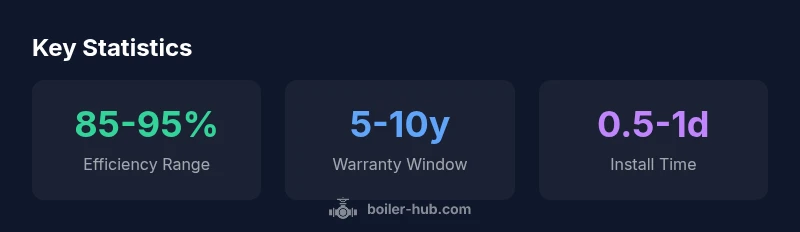
Yes, most Ideal models offer solid efficiency within typical residential ranges. Some premium models push higher efficiency, so check the exact rating on the model label and compare with your climate needs.
Most Ideal models are efficient for their class; check the label for exact efficiency.
Do Ideal boilers come with good warranties?
Warranty terms vary by model and region, but many Ideal boilers include multi-year coverage. Always confirm the specific warranty length and what it covers before purchase.
Warranties vary; verify length and coverage with your installer or retailer.
How do Ideal boilers compare to premium brands?
Premium brands may offer higher efficiency and more advanced controls, but Ideal often provides reliable performance at a lower upfront cost. Your choice depends on whether efficiency or initial price is the priority.
Premium brands can edge out on efficiency; Ideal is strong value.
What maintenance does an Ideal boiler require?
Annual servicing is recommended, with periodic checks of pressure, valves, and safety features. Regular professional maintenance helps prevent breakdowns and extends the boiler’s life.
Have yearly service done to keep it reliable.
Is Ideal suitable for new installations or replacements?
Ideal models suit both new installations and replacements when sized correctly. A professional assessment ensures compatibility with existing radiators and piping.
Ideal works for new installs and replacements when sized properly.
Key Points
- Assess your heating needs before choosing Ideal
- Compare models for efficiency and warranty coverage
- Plan annual servicing to maximize reliability
- Consider total cost of ownership, not just upfront price
- Ensure proper sizing to avoid over- or under-heating