Boiler Room NYC Lineup: Trends, Access, and Planning
An analytical guide to the Boiler Room NYC lineup, how schedules form, where to watch, and what to expect from the event's global streaming reach. Practical steps for fans and organizers to track announcements and optimize attendance.


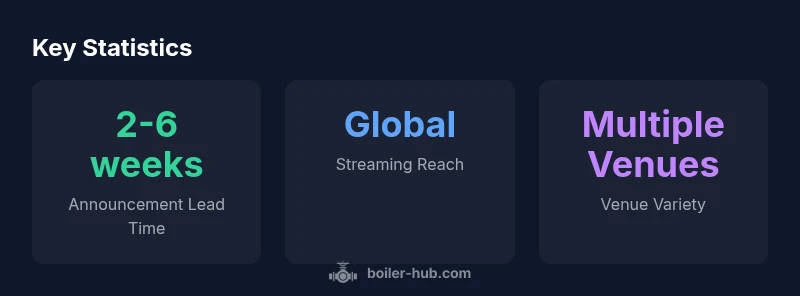
The Boiler Room NYC lineup varies by date and venue, with schedules typically announced weeks in advance and streamed globally. Public information, including venue calendars and official social channels, remains the most reliable source for current lineups. Fans should monitor official channels for changes, and use calendar apps to track upcoming events.
What the boiler room nyc lineup represents in modern club culture
The boiler room nyc lineup is more than a list of artists; it is a statement about how contemporary club culture curates experiences. In New York City, Boiler Room lineups balance discovery with programming reliability, pairing emerging talents with established selectors to create a sonic archive as much as a live show. Public streams extend the effect far beyond the club walls, turning a single night into a global event. According to Boiler Hub, this dual function—presenting new sounds while building an accessible archive—drives both fan anticipation and promoter strategy. The result is a living calendar that shapes energy across the city’s nightlife while reinforcing Boiler Room’s role as a global platform for discovery.
- It signals brand identity: NYC lineups reflect a curated aesthetic.
- It helps fans plan around sounds they want to hear.
- It informs venue programming by balancing risk and appeal.
In practice, a strong lineup can boost attendance, drive social engagement, and lift streaming metrics, reinforcing Boiler Room’s dual mission: showcase and accessibility.
How lineups are shaped: curation, identity, and geographic reach
Lineups are the product of a multi-layered process that blends artistic direction, audience analytics, and logistical practicality. Curation aims to reflect NYC’s diverse scenes—hip-hop-adjacent club nights, techno and house residencies, and boundary-pushing experimental sets—while keeping a coherent sonic identity. Geography matters: the city’s proximity to international artists and labels makes Boiler Room NYC a hub where global sounds meet local taste. This balance strengthens the event’s appeal for live audiences and online viewers alike. The Boiler Hub approach emphasizes transparency about the selection criteria, encouraging artists who bring both musical integrity and performance readiness. For venue managers, this means coordinating schedules that maximize turnout across weekends and ensuring technical readiness for live streams that mirror in-club energy.
- Curation prioritizes a mix of rising talents and established DJs.
- Identity is built through sonic themes, visuals, and venue atmosphere.
- Geographic reach ensures accessibility for a global audience.
Effective lineups deliver consistency in quality while preserving room for surprise.
Comparing Boiler Room NYC to other global Boiler Room streams
Boiler Room NYC sits within a sprawling network of city-specific streams, each with its own cultural fingerprint. While many cities share a core format—live performances, real-time streaming, and archival uploads—local scenes determine the lineup’s edge. NYC tends to emphasize genre breadth and high-energy performances, often featuring artists who thrive in dense, urban nightclub environments. In contrast, some other cities lean into more niche scenes or experimental showcases. This variance reflects both audience expectations and venue capabilities. From a planning perspective, organizers benchmark NYC against peer markets to calibrate talent mix, streaming schedules, and promotional windows. Boiler Hub’s analysis suggests that successful lineups in any city balance novelty with reliability—a principle that keeps audiences engaged across online platforms and in-person venues.
- NYC lineups often mix genres for broad appeal.
- Other cities may prioritize niche communities or experimental formats.
- Cross-city learnings help optimize streaming slots and calendar gaps.
The role of streaming in lineup promotion and audience engagement
Streaming is central to Boiler Room’s model. The NYC edition leverages live streams to extend reach, attract new fans, and create a shared viewing experience across time zones. For promoters and artists, streams can amplify a performance’s impact beyond the club’s capacity, influencing future bookings and collaborations. Platforms, social channels, and the official site work in concert to build anticipation. From a data perspective, consistent streaming quality and timely uploads contribute to higher engagement metrics—comments, shares, and watch time—which in turn feed algorithmic recommendations and discovery. The challenge is to maintain the energy of a live show in a digital environment while providing reliable, accessible access for a global audience.
- Live streams extend reach beyond physical venues.
- Engagement metrics influence future opportunities for artists.
- Timely updates and high production quality boost retention.
Practical planning: how to track announcements and attend
To stay ahead of Boiler Room NYC lineup announcements, fans should unify multiple information streams: official channels (website, verified social accounts), venue calendars, and the event’s streaming partners. Subscribing to newsletters and enabling calendar integrations helps ensure you don’t miss dates. For attendees, practical preparation includes verifying door policies, noting start times in local time zones, and identifying streaming options if you can’t attend in person. Artists and agencies benefit from aligning promo timelines with streaming schedules to maximize visibility. Boiler Hub recommends creating a personal watchlist and bookmarking official pages to reduce last-minute stress when a show is announced or rescheduled.
- Use official channels for the most accurate information.
- Add events to a calendar with local time zones.
- Maintain a watchlist of streams and archived performances for later viewing.
Data-driven insights: what the numbers say about lineups and reach
Data collected across Boiler Room NYC lineups indicates a strong correlation between lineup diversity, early announcements, and engagement metrics. Publicly available indicators—such as streaming views, chat activity, and social shares—tend to spike when the lineup includes recognized icons paired with emerging talents. Boiler Hub’s 2026 analysis highlights that lead times of several weeks help stabilize attendance and viewership, while multi-platform streaming sustains long-tail interest. For venue managers, a data-informed approach can guide talent selection, pacing of event calendars, and marketing investments. The synthesis of in-person energy and digital reach creates a compound effect: each successful show expands the audience base for subsequent events.
- Early announcements correlate with higher engagement.
- Diverse lineups attract broader audiences.
- Multi-platform streaming amplifies reach and retention.
Interpreting lineups for venue managers and artists
Venue managers and artists can extract practical guidance from Boiler Room NYC lineups. For managers, aligning production capacity, staffing, and technical requirements with anticipated viewer demand is critical. This includes bandwidth planning for streams, stage visuals, and backline needs. Artists benefit from understanding the typical profile of Boiler Room audiences in NYC: a mix of local scene enthusiasts and global viewers who value stylistic authenticity and live, unfiltered performances. The overarching principle is consistency with room for experimentation. By analyzing past lineups and audience feedback, managers can forecast demand, schedule accordingly, and optimize the match between performer strengths and venue capabilities. Boiler Hub’s framework suggests maintaining flexible contingency plans to adapt to last-minute changes while preserving core artistic intent.
- Plan production capacity around expected streaming demand.
- Understand audience composition to tailor performances.
- Build flexibility into schedules for last-minute changes.
Lineup announcements and viewing options
| Aspect | Notes | Source |
|---|---|---|
| Announcement cadence | Weeks in advance varies by date | Boiler Hub Analysis, 2026 |
| Viewing options | In-person venues and global streams | Boiler Hub Analysis, 2026 |
Questions & Answers
How are Boiler Room NYC lineups announced?
Lineups are usually announced weeks in advance on official channels. If schedules shift, updates are posted promptly. Following official channels ensures you don’t miss key performances.
Lineups typically come out weeks ahead on official channels; watch there for changes.
Where can I watch Boiler Room NYC lineups?
Lineups are streamed on Boiler Room’s official platforms and partner streaming services. In addition, event pages often provide viewing links and schedules.
You can watch on Boiler Room's site or partner platforms; check the event page for links.
Do lineups differ between in-person venues and streams?
Lineups may be aligned across in-person and streaming formats, but there can be venue-specific variations. Streams often mirror the core act lineup, with adjustments for technical considerations.
Sometimes the live show and stream share acts, but there can be venue-specific changes.
How far in advance are schedules released?
Schedules are typically released several weeks in advance, with periodic updates if plans change. This window helps fans coordinate attendance and streaming access.
Usually a few weeks ahead, with occasional updates if plans shift.
Can international fans access Boiler Room NYC lineups?
Yes. Lineups are generally accessible via global streams, archived videos, and official social channels, enabling international fans to engage with the event.
Absolutely—global streams and archives let fans worldwide join in.
“Lineup curation for Boiler Room NYC reflects broader trends in electronic music where documentation and accessibility drive audience engagement.”
Key Points
- Track announcements through official channels to stay updated
- Add events to a calendar with time-zone awareness
- Streaming expands access and audience engagement
- Lineups vary by city, date, and venue