When to Change Furnace Filter: Optimal Schedule and Practical Guidance
Learn how often to change furnace filters, what factors affect the schedule, and practical steps to maintain airflow, efficiency, and indoor air quality.


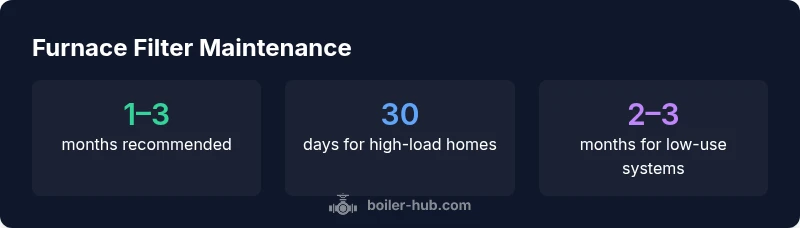
Most homes should change the furnace filter every 1 to 3 months, depending on usage, filter type, and household factors. In homes with pets, smokers, or heavy dust, aim for every 30 days. If you have a low-usage system with a high‑efficiency filter, 3 months can be acceptable. Inspect monthly and adjust as needed.
Why changing the furnace filter matters
A clean air filter is the first line of defense for a boiler or furnace. It protects the heat exchanger from dust and debris, maintains airflow, and helps the system meet energy-efficiency standards. A clogged filter forces the blower to work harder, using more energy and increasing wear. It can also reduce the unit's heating performance and compromise indoor air quality by circulating dust, pollen, and allergens. Regular filter changes are a simple, low-cost maintenance step that preserves equipment life and keeps occupants healthier. Boiler Hub recommends treating the filter as a scheduled maintenance task, not a spontaneous chore, because consistency reduces surprises during cold snaps and peak heating season.
Beyond comfort, a clean filter supports better combustion air quality and can prevent unnecessary strain on the blower motor. If you notice a sudden drop in airflow, higher energy bills, or a cozy room that never seems warm enough, the filter deserves a quick inspection. The rationale is straightforward: filters block debris; debris blocks airflow; blocked airflow can trigger unsafe operating conditions and higher fuel use.
For homeowners, the takeaway is clear: mark a calendar reminder or use a digital log to track filter changes and keep a steady rhythm through the year.
Factors that influence replacement frequency
Replacement frequency is not one-size-fits-all. Several interacting factors determine how often you should change the filter. First, filter type matters: fiberglass filters are the cheapest but clog faster, while pleated and higher-MERV filters trap more particles and may require less frequent changes if your system has brisk airflow and a generously sized return. Second, occupant dynamics drive needs: households with pets, smokers, or allergy sufferers generate more dust and dander, shortening the optimal interval. Third, climate and usage: in cold months, when the furnace runs more hours, filters load faster; in milder seasons, longer intervals may be acceptable. Fourth, system design and duct cleanliness influence filtration needs: restricted ducts or poor sealing increase dust recirculation and shorten the effective interval. Lastly, local air quality matters: homes in windy, dusty environments look at more frequent changes. Use these factors together to tailor a schedule that minimizes energy waste and maximizes comfort.
How to pick the right filter for your system
Selecting the right filter means balancing filtration effectiveness with airflow compatibility. Start by locating the filter size stamped on the frame, then choose a pleated or fiberglass option that fits your filter slot. For many homes, a MERV 6–8 pleated filter delivers solid filtration without overly restricting airflow. If someone in the house has allergies or a high dust load, a higher MERV (8–13) can help, but only if your furnace blower and ductwork can handle the pressure drop. Check the unit’s manual or contact the manufacturer to confirm the maximum supported MERV rating. Additionally, consider filter replacements that are easy to source locally, and think about eco-friendly reusable options if you want to reduce waste. The best filter supports clean air without compromising system efficiency.
How to check and replace safely
Before you begin, turn off the furnace at the thermostat or the service switch to prevent the blower from starting during replacement. Remove the old filter from its slot, note the airflow direction arrow printed on the frame, and check the filter’s condition. If it looks clogged, has visible debris, or smells musty, replace it immediately. Measure the filter dimensions if you’re unsure of the size and ensure a snug fit—air should not bypass the filter. Install the new filter with the airflow arrows pointing toward the blower. Replace the cover securely and reset any thermostat indicators if your system uses an alert for dirty filters. Finally, observe the furnace for a short period to confirm normal operation and airflow.
Scheduling strategies for different households
A pragmatic approach is to start with a 60‑day check for most homes, then adjust based on real-world usage. Pet owners and households with smoke or heavy dust typically benefit from monthly changes. For allergy sufferers, monthly replacements during peak seasons help minimize irritants. In smaller, well-sealed apartments with low humidity, it’s not unusual to extend to every 2–3 months, provided you inspect visually and listen for changes in airflow. Create a simple log: date changed, filter type, and any notes about air quality or system performance. This practical discipline can dramatically reduce the risk of clogged filters and maintain steady comfort.
Common mistakes to avoid
Common mistakes include delaying changes until the system slows noticeably, using filters that are too large or too small for the slot, or choosing a filter with an unrealistically high MERV rating that your blower cannot successfully push air through. Another pitfall is assuming all filters are the same; different manufacturers recommend different replacement intervals, and some filters are washable while others are disposable. Finally, avoid trying to clean a heavily clogged filter only to reuse it—replacing it is safer for the equipment and your health. Treat filter changes as a routine maintenance task rather than a reaction to symptoms.
By following a planned schedule and selecting the right filter, you can protect your boiler or furnace and preserve the quality of indoor air.
Impact on energy usage and indoor air quality
Replacing a dirty filter can yield measurable energy savings because the system doesn’t have to work as hard to push air through clogged media. The resulting improvement in airflow also enhances heat distribution, reducing hot spots and drafts. IAQ benefits include fewer allergens circulating in the home and a reduced likelihood of mold or bacteria growth in humid ducts. While the exact energy savings vary by system and usage, a consistent filter schedule is a simple, cost-effective step that complements other maintenance actions. The combined effect—better airflow, enhanced comfort, and healthier air—makes the case strong for a predictable replacement rhythm.
Troubleshooting a clogged filter indicator or airflow issue
If your furnace or boiler has a dirty filter indicator, that’s a clear cue to inspect and possibly replace the filter. In some homes, you may notice a decrease in airflow, higher blower noise, or uneven heating. Start by turning the unit off, removing the old filter, and inspecting for tears or warping. If the slot is blocked, check for debris in the return duct and ensure the ductwork is sealed. After replacing, run the system briefly to confirm steady airflow and normal sound levels. If problems persist, consult a professional to evaluate duct cleanliness, blower operation, and any seal leaks that could be contributing to performance issues.
Practical steps and maintenance checklist
- Create a 12‑month filter-change calendar with reminders.
- Determine filter size and MERV rating that balance filtration with blower capacity.
- Inspect air quality signs (dust, allergies, humidity) to adjust frequency.
- Check ducts for blockages and seal leaks to maintain proper airflow.
- Keep replacement filters accessible to simplify routine changes.
- Record dates and filter types in a simple log for future reference.
- Have a professional inspect the system annually for overall health and efficiency.
Filter types and their typical replacement cadence
| Filter Type | Recommended Change Frequency | Pros | Cons |
|---|---|---|---|
| Fiberglass/Basic | 1–3 months | Low cost; readily available | Less filtration; quicker clogging |
| Pleated (MERV 8–13) | 1–3 months (pets/allergies may shorten) | Better filtration; captures more particles | Higher cost; may affect airflow if undersized |
| HEPA-rated | 1–3 months or monthly in dusty homes | Superior filtration; great for IAQ | May require higher blower capacity; price varies |
| Washable/reusable | Every 3–6 months (wash) | Eco-friendly; long-term savings | Not suitable for all systems; maintenance required |
Questions & Answers
How often should I change the furnace filter?
Most homes benefit from changing filters every 1–3 months. Increase frequency to monthly with pets, allergies, or heavy dust, and consider extending to 3 months in low-use periods if you inspect airflow regularly.
For most homes, change the furnace filter every 1 to 3 months. If you have pets or allergies, consider monthly changes.
Can I wash and reuse filters?
Some filters are designed to be washable and reusable, but many are disposable. Check the manufacturer’s instructions. Replacing often yields better filtration and reduces the risk of mold growth.
Some filters are washable, but many are disposable. Check the label and replace as recommended.
What if I have allergies or asthma?
For allergy or asthma sufferers, aim for filters with higher MERV ratings (8–13) if your system supports it. Pair with regular changes to minimize airborne triggers.
If you have allergies, use higher‑MERV filters if your equipment allows, and change them more often.
Does changing the filter affect energy bills?
Yes. A clean filter reduces the system’s workload, improving efficiency and potentially lowering energy use. The effect varies with system design and usage.
A clean filter helps your system run more efficiently, which can lower energy bills a bit.
What should I do if the furnace won’t start after changing the filter?
If the furnace won’t start after a filter change, check the panel, reset if needed, and verify that nothing blocks airflow. If issues persist, contact a technician rather than forcing operation.
If it won’t start after a change, check the basics and reset; if it still doesn’t run, call a pro.
Are there signs my filter needs changing sooner?
Yes. Signs include reduced airflow, higher humidity, musty odors, and rising energy bills. Visually inspect filters monthly to catch early signs.
Look for reduced airflow, odours, or higher energy use as cues to change sooner.
“Regular filter maintenance is one of the simplest, most cost-effective ways to protect a boiler system and improve indoor air quality.”
Key Points
- Adopt a scheduled filter-change routine
- Match filter type to system capacity and IAQ needs
- Pet/dust-heavy homes require shorter intervals
- Use monthly checks during peak heating season
- Document changes to optimize maintenance