Parts for Weil Mclain boiler: sourcing, compatibility, and safe replacement
A data-driven guide to sourcing and selecting the right parts for Weil Mclain boilers, with OEM vs aftermarket considerations, model matching, and safety-focused maintenance tips from Boiler Hub.


Parts for Weil Mclain boiler include burners, ignition modules, flame sensors, gas valves, circulators, heat exchangers, pressure switches, and control boards. Always verify the exact model and serial before ordering. Use OEM Weil-McLain parts or authorized equivalents to maintain safety, efficiency, and warranty coverage. Mismatched components can cause poor performance or dangerous malfunctions.
Parts for Weil Mclain boiler: A practical map
Understanding the critical components that keep a Weil Mclain boiler running smoothly starts with a clear map of parts. Practically, you should be familiar with the major assemblies, the role each plays in safe and efficient heating, and how they interact. From burners to control boards, the right part is not just about fit — it’s about correct function within a given boiler model. This is why homeowners and facility managers should begin by confirming the exact model and serial numbers before ordering any replacement components. The phrase parts for weil mclain boiler highlights the need for accurate matching to avoid reliability issues and warranty conflicts. In this guide, we walk through the typical parts, decision points for OEM versus aftermarket options, and practical steps to source, verify, and install components with safety in mind.
Key Components: What each part does
A Weil Mclain boiler relies on several core components that determine performance, safety, and longevity. Here are the most common parts you will encounter:
- Burner assembly: Provides the flame and heat input; the correct burner type and BTU rating must align with the boiler model.
- Ignition module: Initiates the flame and coordinates start-up; failure can prevent firing altogether.
- Flame sensor: Detects flame presence to maintain safe operation; a dirty or failed sensor can cause nuisance shutoffs.
- Gas valve: Controls gas flow; a malfunction can lead to improper firing or fuel leakage risk.
- Circulator pump: Moves hot water through the system; pump wear is a frequent source of reduced heating efficiency.
- Heat exchanger: Transfers heat from combustion gases to the water; damage here can cause reduced efficiency or contamination risks.
- Pressure switches: Ensure correct water pressure for safe ignition and operation; failures can prevent startup.
- Control board: The boiler’s brain; issues here affect all subsystems and diagnostics. For each part, verify compatibility by model and serial, and seek parts with exact part numbers from the manufacturer or authorized distributors.
OEM vs aftermarket parts: Pros and cons
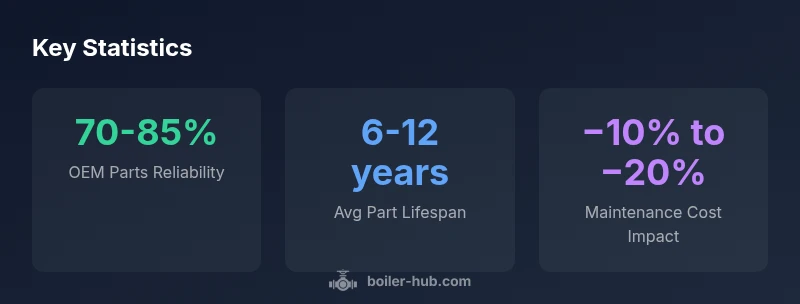
Choosing between OEM and aftermarket components is a central decision. OEM Weil-McLain parts align precisely with your boiler’s design, typically preserving warranty coverage and system efficiency. Aftermarket parts can offer cost savings but often carry variability in fit, performance, and long-term reliability. If your warranty is active, OEM parts are generally the safer choice. For critical safety components (ignition, gas valve, control board), OEM parts are strongly advised to minimize risk of unsafe operation or frequent failures. In non-safety-critical areas (some sensors or minor housings), reputable aftermarket parts can be acceptable; however, verify return policies and factory guidance. Boiler Hub analysis shows that using OEM parts for Weil-McLain boilers often yields better reliability and a lower likelihood of diagnostic confusion during future service. Always demand exact part numbers and cross-check with your boiler’s documentation when substituting parts.
How to identify the right part by model: A practical approach
Correct part selection starts with precise identification. Follow these steps:
- Locate the boiler’s model and serial numbers on the rating plate or installer label.
- Consult Weil-McLain’s official parts catalog or an authorized distributor to locate the exact part number.
- Cross-check the part number against your boiler’s documentation and the service manual.
- If in doubt, call a licensed technician who can confirm compatibility before ordering. Model-match is the best defense against mismatched fit that leads to improper combustion, leaks, or warranty issues.
Safe handling and installation: Key safety practices
Safety is non-negotiable when replacing boiler parts. Before you begin:
- Power down the boiler and lock out the electrical supply; switch off gas at the isolation valve if applicable.
- Purge the system to remove air, especially for circulator or heat exchanger work.
- Use the correct tools and personal protective equipment; never force-fit a component.
- Verify venting integrity and gas connections after installation; perform a leak test with a soapy solution or professional gas sniffer.
- If the part affects combustion or pressure safety (burner, gas valve, ignition, pressure switch), consider professional installation to preserve safety and warranty. Following these steps reduces the risk of leaks, poor combustion, or startup failures.
Maintenance best practices to extend part life
Regular maintenance helps extend the life of parts for Weil Mclain boilers and catch wear before it becomes a failure:
- Schedule annual professional service to inspect ignition, sensors, valves, and controls.
- Clean or replace flame sensors and ignition modules if they show signs of arcing or intermittent firing.
- Inspect circulator pumps for bearing noise or inefficiency; replace seals if weeping occurs.
- Check for water leaks around the heat exchanger and valves; address corrosion early.
- Test safety controls (pressure switches, high-limit switches) and verify proper operation.
- Replace worn gaskets and seals during routine service to prevent hidden leaks that can degrade performance.
- Keep the area around the boiler clean and ensure adequate clearance for air flow. A proactive maintenance plan aligned with OEM recommendations saves money over time and preserves system safety.
Troubleshooting scenarios and when to replace parts
In many cases, diagnosing a failing part properly prevents unnecessary replacements. Common scenarios include:
- Intermittent ignition or failure to fire: inspect ignition module and flame sensor; verify gas supply and controller signals.
- Inconsistent heat output: check the circulator pump, improper pressure, or a blocked heat exchanger.
- Frequent boiler shutdowns or error codes: read the control board diagnostics; identify the failing sensor or safety switch.
- Leaks around valves or heat exchanger: examine seals, gaskets, and the heat exchanger for corrosion.
- No heat with a reliable gas supply: verify valve positions, flame sensor, and ignition layout. In all cases, start with model-specific parts lists and consult a qualified technician for complex diagnostics or when emissions safety could be compromised.
Common Weil-McLain boiler parts and key compatibility considerations
| Part Category | Typical Purpose | Key Compatibility Considerations |
|---|---|---|
| Burner Assembly | Ignition and flame generation | Match BTU rating and fuel type to boiler model |
| Ignition Module | Initiates burner start | Must be compatible with control board and gas valve |
| Flame Sensor | Ensures flame presence | Clean or replace if readings drift; verify with sensor spec |
| Gas Valve | Controls gas flow | Correct valve size and gas type; ensure seat integrity |
| Circulator Pump | Moves hot water | Check compatibility with system pressure and head requirements |
| Heat Exchanger | Transfers heat to water | Inspect for corrosion; OEM replacements preferred |
| Pressure Switch | Ensures safe operating pressure | Set to boiler’s designed operating pressure |
| Control Board | Boiler brain and diagnostics | Firmware and part number must align with model |
Questions & Answers
What parts most commonly fail on Weil-McLain boilers?
Ignition modules, flame sensors, control boards, and gas valves are among the parts that fail most often. Regular diagnostics and timely replacement using model-specific parts help prevent unsafe operation.
Ignition modules and sensors fail most often; replace with the exact model part and have a pro check for safe operation.
How do I verify a replacement part is compatible with my boiler model?
Locate the boiler’s model and serial, consult the official Weil-McLain parts catalog or an authorized distributor, and cross-check the exact part number before purchasing.
Find the model/serial, check the official catalog, and confirm the exact part number before buying.
Is it okay to use aftermarket parts for Weil-McLain boilers?
OEM parts are generally recommended for critical components to preserve safety and warranty. Aftermarket parts can be acceptable for non-safety components if sourced from reputable manufacturers and with clear return policies.
OEM parts are safer, especially for safety-critical pieces; aftermarket can be an option if the part and seller are reputable.
Can I install replacement parts myself?
Basic routine maintenance may be DIY-friendly, but many replacements involve gas, electrical, and combustion systems that require a licensed technician for safety and warranty reasons.
Some simple tasks you can do, but many replacements should be done by a pro for safety and warranty.
What safety checks should be performed after replacing a part?
Test for gas leaks, verify venting, recheck electrical connections, and confirm proper ignition and safe cycling with the boiler’s diagnostics.
Check for leaks and proper ignition after any replacement; run the safety checks with a pro if unsure.
“Using the right Weil-McLain parts is critical for safety and efficiency; OEM parts reduce the risk of improper combustion and unexpected failures.”
Key Points
- Identify exact model/serial before ordering parts
- Prefer OEM Weil-McLain parts for critical components
- Verify part numbers against official catalogs
- Use professional installation for safety-critical replacements
- Regular maintenance prolongs part life and safety