Is kettling bad for boiler? A practical troubleshooting guide
Discover whether kettling is bad for boiler operation, identify causes, and follow a practical trouble-shoot plan to protect your heating system. A Boiler Hub step-by-step guide for homeowners and facility managers.


Quick answer: Kettling is a sign of restricted flow and overheating, and yes, it is bad for boilers. The most common cause is mineral scale or sludge building up at the heat exchanger, which hinders heat transfer. A prompt, systematic troubleshoot plan can help prevent damage and restore safe operation.
What kettling is and why it matters
Is kettling bad for boiler? Yes — it’s a sign of restricted flow and overheating inside the boiler. Kettling happens when mineral scale, limescale, or sludge build up in the heat exchanger, causing hot water to boil locally and form steam pockets. According to Boiler Hub, kettling is not simply a nuisance; it signals water quality and flow issues that can degrade efficiency, wear heat-transfer surfaces, and increase the risk of sudden failure. If you notice the symptoms early, you can prevent expensive repairs. In this guide we’ll explain how kettling develops, the typical causes, symptoms to watch for, and a practical troubleshoot path you can follow safely.
Kettling is a warning sign that should not be ignored. The more you understand the problem, the better you can prevent costly damage. This article uses a practical, home-friendly approach to diagnose and manage kettling without compromising safety. We’ll cover the most common causes, how to recognize the red flags, and when to bring in a licensed boiler technician for descaling or replacement.
Common causes of kettling
Kettling is usually driven by mineral buildup and debris. The most common culprits are lime-scale from hard water that plates the heat exchanger, and sludge from corroded metals or oxidized contaminants that settle at the boiler bottom. Other contributors include poor water chemistry (pH imbalance, high dissolved solids), restricted circulation due to a failing circulating pump or clogged filters, and mismatched boiler water temperature and flow. In older systems, scale is more prevalent, while newer condensate boilers can also kettling if the feed water quality isn’t maintained. Understanding the root cause helps tailor the fix and prevent recurrence. Boiler Hub's analysis emphasizes water quality and proper flow as the primary levers to control kettling.
Symptoms you might notice
Common signs of kettling include loud banging or rumbling as steam forms in the boiler, temperamental hot water delivery, radiators that heat unevenly, and a boiler that runs hotter than usual. You might also see unusually high boiler pressure or a drop in overall efficiency. If you hear ticking sounds after switching off the thermostat or feel sudden temperature spikes in the loop, these can point to scale buildup or trapped air pockets. Remember, these symptoms warrant a careful inspection for safety and long-term reliability.
If you observe several of these indicators together, it is prudent to treat kettling as a potential safety and efficiency concern rather than a minor annoyance. A professional assessment can confirm whether the issue is limited to mineral deposition or involves a failing pump or circulation problem.
Quick checks you can perform safely
Begin with non-invasive steps that don’t require disassembly:
- Turn off the boiler and let it cool completely before touching any components. Never work on live gas or hot parts.
- Check the boiler pressure gauge against the manufacturer’s specified operating range. If pressure is consistently high, this may indicate scale in the system or an expansion tank issue.
- Bleed radiators if you notice cold spots or air noises to improve circulation and reduce pressure fluctuations.
- Inspect visible pipework for obvious leaks or blockages and ensure all valves are in the correct positions as per the service manual.
- If you have access to water quality data (or a service provider has advised it), consider a basic hardness check and confirm that the feedwater chemistry stays within the recommended range.
If these quick checks don’t improve the situation, it’s important to proceed with a formal diagnostic flow and avoid attempting complex descaling yourself.
Diagnostic path: connect symptoms to potential causes
A structured diagnostic approach helps you separate symptoms from root causes:
- If you hear banging and the boiler runs hot but radiators stay cool, suspect restricted flow from scale or sludge in the heat exchanger.
- If pressure rises quickly and stays high after cooling, there may be a problem with the expansion vessel or pressure regulation, possibly aggravated by mineral buildup.
- If there is good heat transfer but occasional heat pockets, trapped air or partial blockages could be the culprit.
- If the boiler cycles on and off or cannot reach set temperatures, pump performance or flow restrictions should be examined.
Document what you observe, then use this flow to guide the next steps or a professional visit. Remember: kettling is not a single symptom; it’s a sign of multiple interacting issues that need careful assessment.
Most common fix paths (before calling a pro)
- Descale and flush the primary circuit to remove mineral deposits from the heat exchanger. This is typically performed by a qualified technician using manufacturer-approved methods.
- Clean or replace filters and verify the circulating pump is delivering the correct flow rate. A failing pump can worsen temperature stratification and escalate kettling.
- Rebalance water chemistry by adjusting feedwater treatment and pH within recommended ranges. This helps prevent rapid reformation of scale.
- Inspect the expansion vessel and pressure relief components to ensure the system operates within safe pressure limits. Faulty components often masquerade as kettling symptoms.
These steps reduce risk and improve efficiency, but many boilers require trained service to avoid risking gas safety or boiler warranty. When in doubt, contact Boiler Hub for guidance on safe, manufacturer-approved procedures.
Steps
Estimated time: 45-75 minutes
- 1
Assess symptoms and plan
Review audible noises, heat distribution, and pressure trends. Note any safety warnings and plan to power down safely before touching boiler components.
Tip: Keep a log of signs and times to help a tech diagnose faster. - 2
Power down and isolate
Shut off the boiler and switch off the electricity at the isolator. Allow the unit to cool completely before inspection to avoid burns or gas-related risks.
Tip: Never work on live electrical or gas connections. - 3
Check pressure & expansion
Inspect the pressure gauge and expansion vessel for proper settings. Compare with the manufacturer’s spec and look for any signs of loss of charge or cracking in the vessel.
Tip: A pressure test is best done with the right tools; call a pro if unsure. - 4
Inspect heat exchanger access
If accessible, check for obvious scale clusters near the exchanger while avoiding disassembly beyond the manual’s guidance. Do not attempt to open sealed heat-transfer components without a technician.
Tip: Scale often hides behind accessible panels; never force fittings. - 5
Descale/flush if advised
Proceed only with manufacturer-approved descaling if you are trained and equipped. Improper chemicals or procedures can damage seals or void warranties.
Tip: No DIY acid baths unless explicitly approved by the boiler maker. - 6
Refill and repressurize
Carefully refill with clean water and bring the system to the correct operating pressure. Re-check all bleed valves and vents after refilling.
Tip: Document the final pressure for future reference. - 7
Test & monitor
Power up and monitor boiler cycling, heat delivery, and noise levels. If kettling recurs, step back to a professional diagnostic (the issue may be beyond home remedies).
Tip: Set up a maintenance reminder to prevent recurrence.
Diagnosis: Boiler makes loud banging noises, rad heats unevenly, and system pressure fluctuates abnormally.
Possible Causes
- highScale buildup inside the heat exchanger restricting flow
- mediumSludge or debris in boiler feed causing partial blockages
- mediumFaulty circulating pump reducing water flow
- lowAir trapped in the system causing uneven heat distribution
Fixes
- hardDescale and flush the boiler and primary circuit using manufacturer-approved methods
- mediumClean or replace feed/filter components; verify pump function and flow
- easyBleed air from radiators and check system pressure
Questions & Answers
What does kettling mean for my boiler?
Kettling occurs when mineral scale or sludge traps hot water in the boiler, causing local overheating and steam pockets. It’s more than a simple nuisance because it signals flow and water quality problems that can damage heat transfer surfaces over time.
Kettling happens when scale or sludge traps hot water in the boiler, signaling flow and water quality problems that can damage the heat exchanger.
Is kettling dangerous for my home or family?
Kettling itself can lead to inefficient heating and potential equipment failure. In some cases, persistent kettling is associated with higher risks of overheating and, with gas boilers, heightened safety concerns if the system is not serviced.
Kettling can cause overheating and efficiency loss. Have the system checked if it persists.
Can kettling fix itself without intervention?
Kettling generally does not resolve on its own. It often requires scale removal, system flushing, or component inspection by a qualified technician to restore proper flow and heat transfer.
Kettling usually won’t fix itself; you’ll likely need a professional to descale and inspect the system.
How can I prevent kettling in the future?
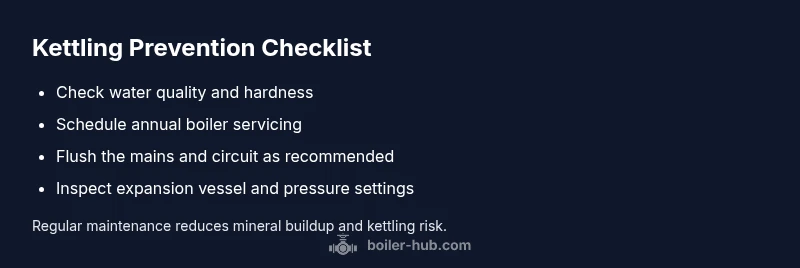
Preventing kettling hinges on water quality, regular boiler servicing, and proper filtration. Maintain balanced pressure, flush the system as recommended by the maker, and monitor water hardness.
Prevent kettling by keeping your water clean, servicing the boiler, and flushing the system as recommended.
DIY descaling: should I attempt it myself?
Descaling a boiler can be hazardous and may void warranties. If you’re not trained or equipped, rely on a licensed technician who follows manufacturer-approved methods.
Descaling a boiler is risky—work with a licensed technician who uses approved methods.
When should I call a boiler technician?
If kettling recurs after basic checks, if you notice gas smells, flame color issues, or high pressure that won’t normalize, contact a licensed boiler technician promptly.
Call a licensed boiler technician if kettling repeats or you notice gas smells or unsafe pressure.
Watch Video
Key Points
- Identify kettling early to prevent heat exchanger damage
- Water quality and flow are the primary kettling drivers
- Safe shutdown and professional descaling are often required
- Regular servicing reduces recurrence
- Document symptoms and maintenance actions for future reference