How to Boiler Room: A Practical Homeowner Guide Step-by-Step
Learn how to safely plan, inspect, and maintain a boiler room. This educational guide covers safety, equipment checks, documentation, maintenance scheduling, and troubleshooting for homeowners and facility managers.


By the end of this guide, you will know how to safely plan, inspect, and organize a boiler room for safety and efficiency. You’ll confirm space and utility access, verify safety devices, check critical components, and set a maintenance schedule you can follow monthly. This quick, practical overview sets the stage for hands-on steps.
What is a boiler room and why it matters
A boiler room is the dedicated space where your home's heating system resides, including the boiler, controls, pumps, and associated piping. For homeowners and facility managers, understanding how to boiler room safely is essential for reliability, energy efficiency, and safety compliance. If you're asking how to boiler room safely and effectively, this overview explains what a boiler room is and why planning matters.
The layout, ventilation, and accessibility of the space influence performance and maintenance. A well-organized boiler room reduces the risk of gas leaks, electrical faults, and water damage while making routine inspections faster and safer. When space is cramped or cluttered, technicians may not be able to perform critical tasks, which can lead to missed warnings or delayed repairs. Boiler room design also affects energy efficiency: properly sized clearances improve air flow, reduce heat buildup, and help controllers regulate supply precisely.
From a safety perspective, make space for safe access to shutoff valves, pressure relief devices, and electrical disconnects. Knowledge of the room’s layout helps you plan a maintenance calendar, document inspections, and coordinate with licensed professionals. In short, a well-maintained boiler room is the foundation of dependable heat and hot water for your property.
Safety fundamentals for boiler rooms
Boiler rooms present common hazards such as gas leaks, hot surfaces, electrical shocks, and slips from spilled water. Understanding these risks is essential when answering how to boiler room safely. Start with a risk assessment: identify all potential ignition sources, ensure ventilation, and confirm that alarms and shutoffs are accessible. Always wear appropriate PPE—gloves, eye protection, and sturdy footwear—when inspecting or performing routine checks. Use a gas detector to identify leaks before work begins, and never ignore a sulfurous smell or hissing sound. Regularly test carbon monoxide detectors and ensure escape routes are clear. Training and clear procedures reduce accidental exposure and improve response times in emergencies.
Planning, documentation, and access control
A successful boiler room plan centers on documentation and controlled access. Create a simple map of the room showing the location of the boiler, valves, electrical disconnects, and pressure relief devices. Maintain a logbook for monthly checks, repairs, and parts replacements, including dates, readings, and technician notes. Establish access rules: only qualified personnel should enter to perform maintenance, and visitors should be escorted. Label all components clearly and keep service manuals on-site or digitally accessible. This structured approach aligns with Boiler Hub’s guidance on operations, safety, and maintenance planning.
Tools, equipment, and routine checks
Before you begin any manual checks, gather essential tools and safety gear. A well-prepared toolkit reduces the risk of mistakes and speeds up each task. Common routine checks include verifying gas pressure and burner operation, inspecting the flue for obstructions, testing safety valves, and confirming circuit protection devices are intact. Maintain a clean, organized workspace by removing clutter and storing spare parts in labeled bins. Regular checks also include documenting flame color, boiler water level, and any unusual noises—the sooner you notice anomalies, the easier the fix.
Step-by-step overview for basic checks
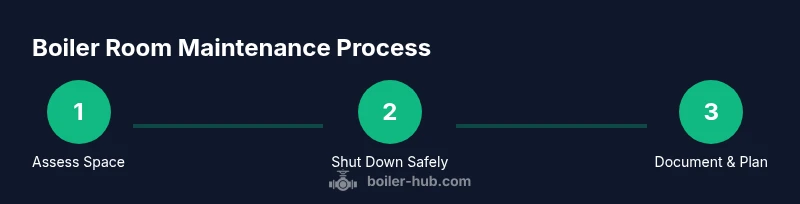
This section provides a high-level pathway for non-technical homeowners to prepare for deeper maintenance with a licensed professional. Start with space assessment, then ensure utilities are shut down safely, and finally review critical components and documentation. Remember, this block offers an overview; the detailed step-by-step instructions follow in the dedicated step-by-step block to avoid duplication. Always defer complex tasks to a qualified technician, especially when combustion safety is involved.
Maintenance culture and future-proofing
A proactive maintenance culture lowers the risk of unexpected boiler failures and extends equipment life. Schedule monthly quick checks, quarterly professional inspections, and annual service intervals. Invest in a simple digital log with reminders for filter changes, vent inspections, and pressure checks. Plan upgrades for energy efficiency, such as upgrading insulation around the boiler room, installing a more accurate thermostat, and monitoring fuel or electrical usage trends. By treating the boiler room as an ongoing project rather than a one-off task, you improve reliability and comfort for occupants.
Tools & Materials
- Screwdriver set (flathead and Phillips)(Assorted sizes; include a magnetized blade)
- Adjustable wrench(Range to fit common nuts and fittings)
- Pipe wrench(For tight copper/iron pipe joints)
- Multimeter(Check electrical circuits and sensors)
- Gas leak detector(Portable flexible probe preferred)
- Flashlight or headlamp(Inspect dark corners and flues)
- Safety gear (gloves, goggles, hard hat)(Protective gear for all tasks)
- Notebook and pen(Log readings and maintenance actions)
- Rags and bucket(Clean spills and wipe components)
- Label maker or tape and marker(Label valves and circuits for future reference)
Steps
Estimated time: 60-90 minutes
- 1
Assess space and identify components
Walk through the boiler room and create a rough inventory of components: boiler, circulator pump, expansion tank, gas line, electrical panel, valves, and sensors. Note access paths to shutoffs and the venting system. Take photos for reference before you intervene.
Tip: Use a flashlight to reveal hidden connections; label each component as you go. - 2
Shut down power and fuel safely
Switch off the boiler and disconnect power at the main electrical disconnect. If you work with gas, ensure the gas supply is shut off at the service shutoff valve. Do not relight pilots or start work unless you’re certain the area is safe.
Tip: Verify power is off with a multimeter before touching any live components. - 3
Inspect safety devices and pressure systems
Check the boiler’s safety relief valve, low-water cutoffs, and pressure gauge readings. Look for corrosion, leaks, or stuck valves. Ensure venting is clear and that carbon monoxide detectors are functioning in adjacent spaces.
Tip: Record the current pressure and any abnormal readings; compare to the manufacturer’s spec sheet. - 4
Check heat exchanger and pumps
Visually inspect the heat exchanger for staining or signs of weakness. Inspect the circulator pump for unusual noise or vibration and ensure electrical connections are tight. Look for signs of wetness around seals and gaskets.
Tip: Listen for hums or grinding sounds which can indicate impending pump failure. - 5
Document findings and plan next steps
Summarize findings in your maintenance log, noting any tasks you can safely perform and those requiring a licensed technician. Schedule the next inspection and set up reminders for routine checks.
Tip: Photograph readings and store them in a central folder for future reference. - 6
Plan professional service and emergency procedures
Create a plan that includes when to call a licensed boiler technician, how to react to gas smells, and emergency shutoff steps. Keep contact details accessible and ensure staff or household members know the procedure.
Tip: Keep a printed copy of emergency numbers near the boiler room.
Questions & Answers
What qualifies as a boiler room?
A boiler room is a dedicated space housing the boiler, controls, and related equipment. It should be ventilated, accessible, and organized to support safe operation and maintenance. Regular checks by competent personnel are essential for safety.
A boiler room is the dedicated space with the boiler and related equipment that needs proper ventilation and regular checks by qualified personnel.
How often should I inspect a boiler room?
Monthly quick checks and quarterly or annual professional inspections are recommended, depending on usage and equipment. Keep a log to track readings and any repairs.
Inspect monthly, with a professional check every quarter to year depending on usage.
Do I need a licensed professional for boiler room work?
Many boiler tasks, especially those involving gas safety or combustion, require a licensed technician. For safe practice, rely on professionals for anything beyond basic cleaning and visual inspection.
Yes—for gas-related and combustion work, hire a licensed professional.
What are common signs of problems in a boiler room?
Look for gas smells, hissing sounds, water leaks, corrosion, pressure fluctuations, or unusual boiler cycling. These signs warrant immediate assessment by a professional.
Common signs are gas smells, leaks, strange noises, and pressure changes.
What safety equipment should I use in a boiler room?
Wear safety goggles, gloves, and sturdy footwear. Ensure carbon monoxide detectors are present and functioning, and keep a fire extinguisher nearby. Do not bypass safety devices.
Wear protective gear and ensure CO detectors are working; never bypass safety devices.
Watch Video
Key Points
- Know the boiler room layout and safety devices before work.
- Shut off power and gas before inspections to prevent hazards.
- Document all readings and create a maintenance schedule.
- Engage licensed professionals for complex tasks or gas issues.
- Maintain organized records to improve reliability and safety.