Do You Need to Service Your Boiler Every Year? A 2026 Guide
Discover whether you should service your boiler each year, what a professional check covers, and how Boiler Hub recommends maintaining safety and efficiency in 2026.


Short answer: Yes, in most homes you should arrange annual boiler servicing with a qualified technician. Regular yearly service protects your family from combustion gases, keeps efficiency high, and catches developing faults early. According to Boiler Hub, the question do you need to service boiler every year has a straightforward answer: follow the manufacturer’s schedule and have a professional inspect annually for safety and reliability.
Why annual boiler servicing matters
According to Boiler Hub, regular annual boiler servicing is essential for safety and efficiency. Many homeowners ask, do you need to service boiler every year? The answer, supported by Boiler Hub analysis, is generally yes for most homes. A technician will inspect the burner, heat exchanger, seals, and venting for signs of wear or obstruction, calibrate controls, and verify that carbon monoxide detectors are functioning. A thorough service helps prevent gas leaks, reduces fuel consumption, and extends the life of your boiler. Skipping maintenance can lead to reduced efficiency, higher energy bills, and an increased risk of dangerous malfunctions. In 2026, the consensus among home boiler guides is that annual service remains the best practice for ensuring reliable heating through the colder months. The boiler system you rely on should be treated with regular professional attention, not just when problems arise. The goal is to maintain peak performance while limiting surprises during winter demands.
How to prepare for your annual service
Before the service, take a few practical steps to ensure the technician can work safely and efficiently. Gather your boiler model and serial numbers, locate the gas supply shutoff and the electrical disconnect, and remove clutter from the boiler area. Check that CO detectors are functioning and that smoke alarms have fresh batteries. If you have recent issues such as unusual noises, pressure drops, or fluctuating temperatures, write them down and share them with the technician. Confirm access to the boiler room and provide the service provider with any manual for reference. If your home has multiple boilers or zone controls, list their locations and any thermostat quirks. Finally, note whether your boiler has a recent warranty or service history that should be considered during the visit. Following these steps helps the service visit go smoothly and helps the technician focus on the critical safety and efficiency checks.
What happens during a professional service
During a formal boiler service a licensed technician conducts a series of safety and performance checks. They will inspect the burner assembly, gas valve, seals, heat exchanger, and flue pipe for signs of wear or leakage. A combustion analysis with a flue gas analyzer confirms the fuel is burning cleanly and safely, and carbon monoxide levels are within safe limits. The technician tests the thermostat, pressure relief valve, and automatic air vent, and checks pump operation and system circulation. They will also inspect electrical connections and control boards for signs of overheating. Finally, the service report will summarize findings, list any recommended parts replacements, and provide an estimated next service date. This process protects your family, improves efficiency, and helps prevent unexpected breakdowns.
Do-it-yourself checks you can safely perform between visits
Between professional visits you can perform simple safety checks that do not involve gas controls. Regularly inspect for visible leaks, rust, or corrosion on the boiler and associated piping. Listen for odd banging, whistling, or popping sounds that may indicate air in the system or trapped debris. Check the boiler pressure gauge and ensure it sits within the normal range indicated in your manual. Test CO detectors and smoke alarms to ensure they are functioning. Keep the area around the boiler clean and dry, and replace any worn seals or gaskets only under professional supervision. If you notice a loss of heat or sudden changes in pressure, contact a service provider promptly. These steps do not replace annual service but help you monitor your system between visits.
Costs, scheduling, and risk of skipping service
Annual boiler service cost varies by location, boiler type, and service provider. Rather than focusing on price alone, consider the value of safety, reliability, and energy efficiency. A yearly service aligns with best practice guidelines and manufacturer recommendations. Skipping a service increases the risk of hidden faults, carbon monoxide exposure, reduced efficiency, and unexpected outages during cold weather. By scheduling a service in advance, you can choose a convenient window and minimize the chance of a last minute emergency. Remember to request a written service report and keep it with your boiler documents for warranty or insurance purposes. Boiler Hub emphasizes balancing cost with risk and prioritizing safety and reliability for every home heating system.
When to service more often or for special boilers
Some boiler configurations or high usage conditions may benefit from more frequent servicing. Combi boilers and high output systems often require annual checks, while older installations may warrant more frequent attention based on usage and manufacturer guidance. For boiler systems with multiple zones, or in homes with hard water and mineral buildup, a professional may recommend additional cleaning or part replacements. In new installations, follow the manufacturer schedule and any warranty requirements to preserve coverage. If you notice corrosion, unusual odors, or loss of pressure, contact a qualified technician promptly rather than delaying service. Regular maintenance remains the best defense against costly breakdowns and safety risks.
Tools & Materials
- Safety goggles(Protect eyes from debris and chemical splashes)
- Work gloves(Cut-resistant or heavy-duty gloves)
- Flashlight(Bright portable light for dark cabinets)
- Screwdriver set (Phillips and flathead)(For access panels and screws)
- Multimeter or non-contact voltage tester(For electrical checks only if qualified)
- Stethoscope (optional)(For listening to operating noise)
- Rags or absorbent pads(Clean spills and protect work area)
- Boiler manual or model numbers(Have handy for reference)
Steps
Estimated time: 2-4 hours
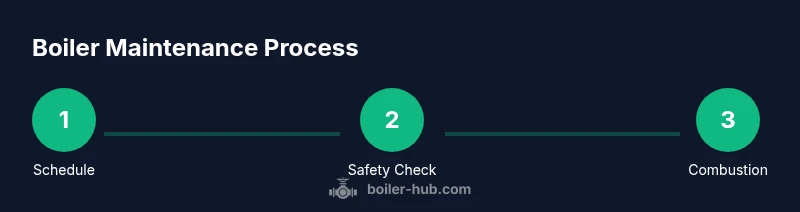
- 1
Schedule the service with a qualified technician
Contact a licensed boiler professional and confirm boiler type, location, and service scope. Share model numbers, any recent issues, and the preferred timing. Confirm whether you need a written estimate or a fixed quote before work begins.
Tip: Ask about the expected duration and whether a test report will be provided. - 2
Shut off power and isolate the gas supply
Before any inspection, switch off the boiler power at the disconnect and ensure the gas supply valve to the appliance is closed if applicable. Ventilate the area if you smell gas and keep flames or sparks away during setup.
Tip: Do not rely on a thermostat or switch to shut down gas; use the dedicated shutoff valve. - 3
Provide access and prepare the boiler area
Clear the boiler cabinet and ensure there is safe, dry access for the technician. Remove clutter and keep pets away. The tech will remove the panel covers to inspect the burner, seals, and heat exchanger.
Tip: Have the boiler manual handy to verify model specifics and recommended service steps. - 4
Conduct combustion analysis and safety checks
The technician will analyze combustion with a gas analyzer to confirm safe emissions, check CO levels, and verify venting integrity. They will test safety devices such as the pressure relief valve and thermostat operation.
Tip: Ask to see the analyzer readings and what they mean for your boiler's efficiency. - 5
Inspect venting, seals, and heat exchanger
The tech will look for soot, corrosion, cracks, and leaks in seals and flue connections. They may clean or replace worn gaskets and advise on any parts that show wear.
Tip: Take notes on any parts recommended for replacement and ask about long-term maintenance. - 6
Review findings and document next steps
Receive a written service report with test results, recommendations, and a suggested service interval. Schedule any required follow-up work or part replacements, and note warranty implications.
Tip: Keep the report in your records and set a reminder for the next annual service.
Questions & Answers
Do I really need to service my boiler every year?
Yes, annual boiler servicing is generally recommended for safety and efficiency. A licensed technician will inspect key components, verify safe operation, and identify wear before problems arise.
Yes. A yearly service keeps your boiler safe and efficient and helps prevent unexpected breakdowns.
What happens during a boiler service?
A technician conducts a safety inspection, tests combustion, checks venting and pressure, and reviews controls. They provide a service report with any recommendations for parts or future checks.
A pro will inspect safety features, test combustion, and share a report with next steps.
What are the risks of skipping yearly service?
Neglect can hide faults, lead to higher fuel use, and increase the risk of carbon monoxide exposure. It may result in sudden outages during cold weather.
Skipping can hide problems and raise safety and cost risks.
Can homeowners perform basic checks themselves?
You can perform basic safety checks like CO detector tests and looking for leaks, but resist adjusting gas components or attempting internal repairs.
You can do simple safety checks, but don’t try to service the boiler yourself.
How much does boiler servicing cost?
Costs vary by location, boiler type, and provider. Get a written quote and consider the value of safety, reliability, and energy efficiency.
Prices vary; ask for a quote and compare service value.
Is the service interval the same for all boiler types?
Most boilers benefit from annual service, but some types or warranties may call for different intervals. Always check your manual and warranty terms.
Most boilers need yearly service, but check your manual and warranty.
Watch Video
Key Points
- Schedule annual service with a licensed technician.
- A professional check improves safety and efficiency.
- Keep a service log for warranty and maintenance.
- Do simple safety checks between visits, but never disassemble gas components.
- Know your boiler type and follow manufacturer guidance for service intervals.