Boiler Servicing: A Complete How-To Guide
Learn how boiler servicing enhances safety, efficiency, and reliability. This step-by-step guide covers what to expect, what you can safely check, and how to choose a qualified technician for your home.


Boiler servicing improves safety, efficiency, and reliability by a licensed technician who performs safety checks, combustion analysis, burner cleaning, and system adjustments. The service typically includes inspecting the boiler, verifying pressure and temperatures, testing carbon monoxide detectors, and delivering a maintenance plan. Before the appointment, gather your boiler model details, warranty information, and any recent service records.
Why boiler servicing matters for safety and efficiency
Regular boiler servicing is not a luxury; it's a core safety and efficiency practice for any home or facility relying on a gas boiler. According to Boiler Hub, regular boiler servicing reduces the risk of dangerous carbon monoxide leaks, lowers the chance of unexpected breakdowns, and helps maintain optimal fuel efficiency. By catching worn seals, developing corrosion, or burner misalignment early, you prevent costly repairs and protect occupants. A well-serviced boiler also runs cleaner, with steadier heat delivery and fewer temperature fluctuations. In terms of energy costs, a properly maintained system loses less energy to friction, sludge, and poor combustion. Boiler Hub Analysis, 2026 shows that inspection-driven maintenance correlates with steadier performance over the life of the unit. Homeowners and facility managers should view servicing as preventive care rather than a repair delay. Scheduling a service before peak heating season can prevent emergency outages, protect warranties, and improve comfort. The goal is to keep the boiler safe, reliable, and economical without compromising indoor air quality.
How a professional service typically unfolds
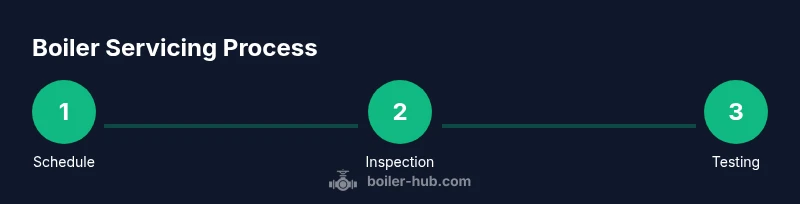
A boiler service is a planned appointment rather than a repair call. A qualified technician begins with a safety assessment to confirm gas and electricity are isolated and that the area is clear for access. They verify boiler model details, check warranty applicability, and discuss any symptoms you’ve noticed. The core service then proceeds through a structured sequence: exterior inspection, control tests, combustion analysis, cleaning of burner and critical components, and finally a short report with recommendations. It’s common for the technician to adjust burner settings to achieve safe, efficient combustion and to verify flue integrity. Throughout the visit, technicians document readings and provide practical maintenance tips you can implement between visits. If issues are found that require replacement parts or component service, they will explain the implications, outline a timeline, and help you plan follow-up work. In some regions, you may be asked to authorize work beyond the standard service, such as pressure relief valve checks or expansion vessel tests. In any case, expect a transparent, safety-focused assessment rather than a routine tune-up.
Key checks during a service
During a service, a technician typically conducts a set of checks to ensure safe operation and optimal performance:
- Exterior and venting inspection: examine the boiler casing, flue, and vent terminals for signs of damage or blockage.
- Safety devices: test the pressure relief valve, low-water cut-off, and any flame safeguard controls.
- Gas supply and flame quality: verify gas pressure and inspect the flame pattern for yellow tips or instability.
- Seals, gaskets, and burner assembly: look for signs of wear or leaks that could allow combustion byproducts to enter living spaces.
- Heat exchanger and condensate system: assess for corrosion, blockages, or excessive condensation.
- Controls and thermostats: ensure settings respond accurately and the boiler maintains target temperatures.
- Flue gas analysis: measure CO, CO2 and oxygen levels to gauge efficiency and combustion safety.
- Water pressure and expansion vessel: confirm system pressure is correct and the vessel is functioning.
- Documentation: record readings, maintenance actions, and recommended future work.
Note: Only trained professionals should perform combustion and pressure-related checks. Homeowners should avoid opening sealed parts.
Combustion analysis and efficiency testing
Combustion analysis is a critical part of modern boiler servicing. A qualified engineer uses a gas analysers to measure carbon monoxide (CO), carbon dioxide (CO2), and oxygen levels in the flue gas. This data helps determine whether the burner is operating within safe, efficient parameters. If readings indicate inefficient combustion or excessive CO, the technician will adjust burner pressure, nozzle sizing, or air-to-gas ratio to restore safe operation and improve efficiency. Efficiency improvements are often modest but meaningful over the boiler’s life, reducing fuel consumption and emissions. In addition to the formal test, a technician may review the boiler’s heat exchanger cleanliness and combustion chamber condition, since buildup can degrade performance. The end result should be stable flame quality, correct flue velocity, and a clear maintenance path to keep the system performing as designed.
Common signs your boiler needs servicing
Boilers typically reveal service needs through a mix of audible, visual, and thermal cues. Look for: unusual banging or kettling sounds; inconsistent heat output or cold patches in radiators; frequent cycling on and off; increased fuel bills without a change in usage; error codes on digital displays (e.g., e1, f1); yellow or unstable flames; visible signs of leaks around joints or valves; water on the floor near the boiler; black soot in the flue area. If you notice any of these indicators, schedule a service promptly. Regular maintenance helps catch issues before they cause a breakdown, maintains safety standards, and minimizes costly repairs. Boiler Hub’s guidance emphasizes proactive checks and timely diagnostics to avoid disruptive outages.
Safe DIY maintenance you can perform
Homeowners can perform select, safe maintenance tasks between professional visits. Start by bleeding radiators to eliminate trapped air that causes cold spots. Check the boiler pressure gauge and ensure it sits within the manufacturer’s recommended range when the system is cold. Keep the area around the boiler clean and free of clutter, and replace batteries in CO detectors and room thermostats as needed. Do not attempt internal cleaning of burners, condensate traps, or sealed components; these tasks require a licensed technician. If you notice a persistent error code or a sudden drop in performance, contact your service provider rather than trying to override settings. Routine visibility checks and simple清hygiene tasks can help you stay proactive, but they do not replace professional servicing.
How servicing impacts energy bills and emissions
A well-maintained boiler typically operates more efficiently, converting a higher share of fuel into usable heat. When components such as burners, heat exchangers, and seals are clean and correctly adjusted, fuel is burned more completely, reducing wasted energy. Better combustion also lowers greenhouse gas emissions associated with heating. Although gains vary by boiler type, age, and usage, routine servicing supports smoother operation, more consistent indoor temperatures, and fewer cold starts that spike energy use. Boiler Hub’s analysis highlights that consistent maintenance correlates with reduced fuel consumption over time and extended equipment life, offering a practical, long-term return on investment for building owners.
What to ask your technician before a service
Preparing a small list of questions can maximize the value of a service visit. Consider asking: What is the current status of my boiler’s safety devices? When was the last combustion analysis performed, and what were the results? Are components such as the expansion vessel or heat exchanger in good condition? Do you recommend any part replacements or system upgrades for better efficiency? Will you provide a written service report with readings and a maintenance plan? Can I schedule the next service now and set up reminders? These questions help you understand the health of the system and plan for future maintenance.
Maintenance planning and record-keeping
Effective boiler maintenance relies on a clear plan and good records. After a service, store the technician’s report, readings, and any recommended actions in a dedicated file or digital folder. Schedule the next service within the manufacturer’s recommended interval and set calendar reminders. Maintain a log of any symptoms you observed between visits, including dates and symptoms, to help the technician diagnose issues more efficiently. Warranties often require documented maintenance to remain valid, so keeping a detailed log can also protect your investment. A proactive maintenance approach reduces the risk of unexpected outages and supports long-term performance.
Choosing a service provider and budgeting tips
Selecting the right technician starts with verification of credentials, such as a valid gas-safety certification and affiliation with a recognized trade body. Seek quotes from multiple providers and compare what each service includes—compliance testing, combustion analysis, burner cleaning, part inspections, and a written maintenance plan. Ask about after-service support and what constitutes an emergency response window. In budgeting terms, plan for an annual service and occasional component replacements; avoid basing decisions solely on the lowest price, which can compromise safety or quality. Also consider local reputation and customer reviews when assessing long-term value.
Tools & Materials
- Gas-safe licensed boiler technician(Ensure certification is valid for your country/region.)
- Owner's manual and recent service records(Helps verify model details and maintenance history.)
- Clear access to boiler room and controls(Safety space for technician to work and test components.)
- Flashlight or headlamp(Illumination for tight cabinets or dark spaces.)
- Notepad or digital device for notes(Capture readings and recommendations.)
- Basic safety gear (gloves, goggles)(Useful but not strictly mandatory for homeowners.)
Steps
Estimated time: 1.5-3 hours
- 1
Schedule service appointment
Contact a licensed boiler technician and confirm credentials. Verify the boiler model, age, and history before the visit to streamline the service and ensure the technician brings appropriate tools and parts.
Tip: Have the boiler’s model, serial number, and any recent fault codes on hand. - 2
Prepare the work area
Clear space around the boiler and ensure safe access to the controls. Remove any clutter and confirm that the area has adequate lighting for inspection and testing.
Tip: Turn off power and gas only if instructed by the technician; otherwise leave controls as-is for safety. - 3
Isolate power and gas if required
Let the technician determine whether disconnection is necessary for safety. The step is intended to prevent accidental energisation and gas release while inspections occur.
Tip: Do not attempt to disconnect gas lines yourself. - 4
Inspect exterior and venting
The technician checks casing integrity, flue terminals, and venting for blockages or damage that could cause unsafe combustion or backdrafting.
Tip: Note any visible soot or rust around joints as these can indicate leaks. - 5
Perform combustion analysis
A gas analyser measures CO, CO2, and oxygen to assess burner efficiency and safety. Adjustments may be made to optimize combustion without compromising safety.
Tip: This analysis informs both safety and energy efficiency improvements. - 6
Clean and inspect critical components
Burner, jets/nozzles, heat exchanger, and condensate trap are checked and cleaned as needed to restore proper function and heat transfer.
Tip: Only trained professionals should handle burner components. - 7
Check pressure and expansion system
System pressure, expansion vessel condition, and boiler controls are verified to ensure reliable hot water and heating.
Tip: If pressure is outside the recommended range, the technician will advise corrective steps. - 8
Run and test operating conditions
The boiler is brought to normal operating conditions, and the technician confirms temperatures, cycling, and safe operation across heating and hot water modes.
Tip: Watch for stable flame and consistent heat delivery during testing. - 9
Review findings and maintenance plan
A written report is provided with readings, safety notes, and suggested future maintenance or replacements. A practical maintenance plan helps you stay prepared.
Tip: Ask about warranties and recommended service intervals. - 10
Schedule next service
Agree on a date for the next service and set reminders or automatic rebooking if available.
Tip: Keep a service history log to support warranty and resale value.
Questions & Answers
What is boiler servicing and why is it important?
Boiler servicing is a professional inspection and maintenance process performed by a licensed technician to ensure safe operation, improve efficiency, and extend the boiler’s life. Regular servicing helps detect issues early and prevent dangerous conditions, such as carbon monoxide leaks.
Boiler servicing is a professional check that keeps your boiler safe and efficient. It helps catch problems early and prevents dangerous conditions.
How often should I service my boiler?
Most manufacturers and safety guidelines recommend an annual service by a qualified technician. The exact interval may vary based on boiler type, usage, and age, so consult your manual and local regulations for specifics.
Most boilers should be serviced once a year. Check your manual and local rules for any exceptions.
Can I perform boiler servicing myself?
No. Boiler servicing involves gas systems, electrical components, and combustion testing that require a licensed technician. Improper handling can cause leaks, fires, or carbon monoxide exposure.
Servicing a boiler is a job for a licensed professional. Don’t try it yourself.
What safety checks are included in a service?
A typical service includes a safety device test, gas pressure verification, flue inspection, CO/CO2 testing, burner adjustments, and a safety risk assessment. The exact checks may vary by region and boiler model.
Safety checks include valve tests, gas pressure checks, and carbon monoxide testing.
How long does a boiler service take?
Most boiler services take about 60 to 120 minutes, depending on the boiler type, accessibility, and whether any issues are found requiring additional inspection.
Most services take about one to two hours.
What if my boiler needs replacements?
If replacements or major repairs are needed, the technician will explain options, implications, and costs, and help plan a timeline that fits your budget and safety requirements.
If parts need replacement, you’ll get clear options and timelines.
Will servicing improve energy bills?
Yes, by ensuring efficient combustion and reducing heat losses, servicing can lower energy consumption. Results vary by boiler type and usage but are generally favorable for well-maintained systems.
Servicing can help cut energy use by keeping the boiler efficient.
Do I need to keep service records for warranties?
Many warranties require regular servicing as a condition of coverage. Keeping a detailed service log helps protect your warranty and resale value.
Regular service records are often needed for warranty protection.
Watch Video
Key Points
- Schedule annual boiler servicing with a licensed tech.
- Expect safety checks, combustion analysis, and component inspection.
- Document readings and maintain a service history.
- Use the maintenance plan to optimize efficiency and longevity.
- Never bypass safety devices or perform internal maintenance yourself.