Boiler Cleaning Near Me: Find Trusted Local Services
Find trusted boiler cleaning near me by comparing licensed technicians, checking boiler-specific certifications, and reading reviews. This guide helps homeowners and facility managers choose safe, efficient boiler cleaning services.


To find reliable boiler cleaning near me, start with licensed HVAC professionals who specialize in boilers. Look for local technicians with boiler-specific certifications, clear service criteria, and transparent pricing. Check reviews, confirm they provide a boiler-cleaning service, and ask about fuel type and system compatibility. Boiler Hub recommends verifying licenses, insurance, and written estimates before work begins.
Why boiler cleaning matters for safety and efficiency
Boiler systems are designed to provide reliable heat, but they also demand regular maintenance to stay safe and efficient. According to Boiler Hub, regular boiler cleaning near me helps prevent soot buildup, improves combustion, and reduces the risk of hazardous conditions in occupied spaces. Small particles can infiltrate the burner, clog nozzles, and cause incomplete combustion, which wastes fuel and increases carbon monoxide risk. In homes and facilities, maintaining clean heat exchangers and burners is not just about comfort; it's about safety, energy costs, and equipment longevity.
Homeowners who schedule annual or semi-annual cleanings often see steadier pressure, fewer ignition failures, and longer equipment life. Boiler Hub Analysis, 2026 indicates that facilities with a proactive boiler-cleaning plan report fewer emergency repairs and lower energy waste compared to those that neglect routine maintenance. The cleanliness of the boiler’s internal components influences heat transfer efficiency. When mineral scale, sludge, and corrosion byproducts accumulate, the boiler must work harder to deliver the same amount of heat, which can translate to higher energy bills and more frequent service calls.
Understanding the value of boiler cleaning near me means recognizing both immediate and long-term benefits: safer operation, lower fuel costs, and reduced probability of dangerous malfunctions. The next sections explain how professionals approach this task and how you can choose a reputable provider in your area.
How professionals perform boiler cleaning (boiler cleaning near me)
Professional boiler cleaning is a coordinated process that combines safety protocols with precise mechanical and chemical cleaning. Technicians begin with a pre-inspection to assess the burner, heat exchanger, and fuel supply. Lockout/tagout procedures are executed to ensure the system cannot be powered during maintenance. The team checks venting and combustion air to confirm safe operation before opening the boiler casing.
Next, technicians remove loose deposits using mechanical tools such as brushes and descaling agents that are compatible with the specific boiler type. They inspect and clean nozzles, burners, and the combustion chamber to restore proper flame quality and even heat distribution. A controlled flush removes loosened sediment from the system, including circulatory loops, pumps, and the feedwater path. Condensate traps and piping get a thorough wash to prevent clogging that can degrade efficiency.
After cleaning, technicians reassemble components, reinstall safety devices, and perform tests. They verify burner alignment, monitor flame characteristics, confirm vent integrity, and run the boiler through cycles to observe ignition reliability and pressure stability. Finally, they document findings and provide a maintenance plan, including recommended service intervals and part replacements if needed. A written estimate and a summary of work completed are usually delivered for your records.
DIY vs professional cleaning: risks and limits
Do-it-yourself boiler cleaning is tempting for budget reasons, but it carries notable risks. Boilers operate under high pressure and heat, and improper cleaning can damage heat exchangers, void warranties, or create unsafe combustion conditions. Chemical cleaners, if misused, may cause corrosion or residue buildup that reduces efficiency rather than improving it. In oil-fired or gas-fired systems, improper handling of fuels, vents, or shutoff valves can lead to leaks or toxic gas exposure. Professional cleaners have specialized training, protective equipment, and calibrated instruments to detect leaks, measure combustion efficiency, and ensure safe operation after service.
DIY cleaning is generally discouraged for boilers with closed-loop systems, high-efficiency configurations, or if your boiler serves a large building. For most homeowners and facility managers, the best approach is to rely on licensed technicians who specialize in boiler maintenance. If you still attempt a DIY inspection, limit it to basic visual checks and keep a log of symptoms, but leave cleaning and component access to professionals. This approach minimizes risk while ensuring you benefit from proper cleaning and later diagnostics.
Factors that influence cleaning frequency and cost near you
Several elements determine how often you should clean a boiler and what you can expect to pay. regional demand and labor costs influence pricing, while boiler type (gas, oil, or combination) affects both complexity and risk. Older boilers tend to accumulate more scale and corrosion, necessitating more frequent cleanings. Water quality plays a crucial role; hard water increases mineral buildup on heat-transfer surfaces, which can escalate maintenance needs over time. The complexity of hydronic systems, such as those with multiple zones or feedwater pretreatment, also affects service duration and cost. Finally, warranties or manufacturer guidance may specify cleaning intervals, which you should consult before scheduling.
Boiler Hub analysis indicates that proactive maintenance, including regular cleanings and inspections, can reduce emergency repairs and energy waste in the long run. When planning a cleaning near you, request a written scope of work, a detailed price breakdown, and a maintenance schedule tailored to your system’s age, fuel type, and water quality. Compare multiple quotes to ensure you’re getting transparent pricing and a reasonable timeline for completion.
What to expect during a boiler cleaning visit
A boiler cleaning visit typically unfolds in stages designed to minimize downtime and maximize safety. Before arrival, ensure access to the boiler room and confirm that all safety devices are functional. On-site, technicians perform a final pre-cleaning safety check, then begin with disassembly and inspection. You’ll likely see technicians wearing protective gear and using specialized vacuums to avoid dispersing dust and fumes. Expect guidance on any thermostat or pressure adjustments required post-cleaning, and be prepared for temporary changes in heating during the process. After the work is complete, the technician should provide a written report detailing what was cleaned, parts replaced, and any recommendations for ongoing maintenance or future visits.
To get the most from the visit, ask for a post-cleaning checklist and a maintenance calendar. Scheduling your next cleaning within the recommended window helps maintain efficiency and safety.
Aftercare tips to extend the benefits
After a boiler cleaning near me, implement a simple maintenance routine to preserve efficiency gains. Regularly inspect and replace air filters, monitor water quality, and check the pressure gauge for stability. Keep an up-to-date service log with dates and notes about any performance changes. If your boiler has a corrosion-prone environment or mineral-rich water, consider installing a water treatment solution to slow scale formation. Schedule an annual professional inspection to catch evolving issues early and ensure your system remains compliant with manufacturer recommendations and local regulations. A proactive approach to aftercare extends the benefits of professional cleaning and reduces the likelihood of unexpected breakdowns.
Common myths about boiler cleaning
Myth: Cleaning a boiler is only needed when it won’t heat. Fact: Regular cleaning helps maintain heat transfer efficiency and prevents gradual performance decline. Myth: DIY cleaning is enough to keep a boiler in top shape. Fact: Professional cleaning ensures proper safety checks and is essential for complex systems. Myth: Cleaning a boiler makes it last forever. Fact: Regular maintenance extends life but boilers still have finite service durations based on age and design. Myth: All cleaning products are interchangeable. Fact: Boiler-grade cleaners are formulated for specific metals and deposits; using the wrong product can cause damage.
Maintenance cadence by boiler type
| Boiler Type | Recommended Cleaning Frequency | Typical Cost Range |
|---|---|---|
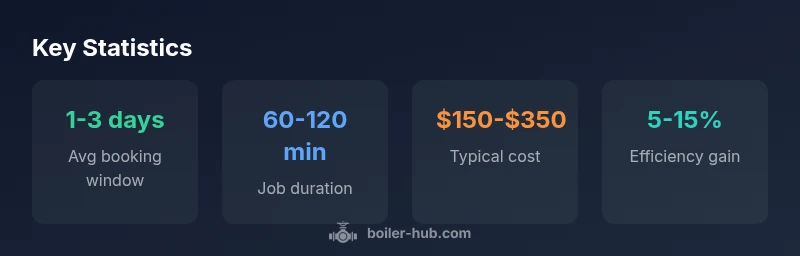
| Gas-fired boiler | 2-3 years | $150-$350 |
| Oil-fired boiler | 2-3 years | $180-$420 |
| Combination boiler (combi) | 1-2 years | $120-$320 |
Questions & Answers
What exactly is involved in boiler cleaning?
Boiler cleaning involves inspecting the burner and heat exchanger, removing soot and mineral buildup, flushing the system, and testing safety and efficiency after reassembly. It may include cleaning nozzles, checking gas valves, and verifying venting.
Boiler cleaning includes inspecting, cleaning, flushing, and testing the system to ensure safe and efficient operation.
How often should I schedule boiler cleaning?
Frequency depends on boiler type, water quality, and usage. Most homes benefit from cleaning every 1-3 years, with more frequent service for hard water or older systems. Always follow manufacturer guidance and local climate considerations.
Most homes do this every 1-3 years, depending on water quality and usage.
Can I clean my boiler myself to save money?
DIY cleaning is generally not advised for boilers. Incorrect handling can cause safety hazards, equipment damage, and warranty issues. Hire a licensed professional for safe and effective cleaning.
It's best to hire a licensed professional for boiler cleaning.
Is boiler cleaning necessary if my boiler is well-maintained?
Yes. Routine cleaning complements inspections, verifies safe operation, and ensures continued efficiency. Even well-maintained boilers benefit from professional cleaning to address hidden buildup.
Even well-maintained boilers benefit from professional cleaning to prevent hidden buildup.
How can I find boiler cleaning near me?
Start with licensed, boiler-specialist technicians in your area. Check reviews, verify certifications, request written estimates, and compare service scopes. Ask about equipment compatibility and warranty implications before work begins.
Look for licensed boiler specialists nearby and compare quotes before booking.
What questions should I ask during the service visit?
Ask about the scope of cleaning, parts replaced, expected runtime, post-cleaning performance, warranty coverage, and any maintenance tasks you should perform until the next visit.
Ask about scope, duration, costs, and post-cleaning steps.
“Regular boiler cleaning isn’t optional—it's essential for safety and efficiency. Clean systems burn cleaner and run more reliably, reducing energy waste and costly repairs.”
Key Points
- Schedule regular boiler cleanings to protect safety and efficiency
- Prefer licensed technicians with boiler-specific certifications
- Request written estimates and a clear maintenance plan
- Understand whether your system benefits from annual checks
- Follow post-cleaning care to maximize gains