What to Use for a Double Boiler: Best Options
Learn safe, practical options for a double boiler, including DIY setups and cookware choices, with tips for even heat and avoiding scorching. Boiler Hub guides home cooks.


Wondering what to use for a double boiler? Start with a heatproof bowl (or a dedicated insert) placed over a pot with simmering water. Avoid direct heat, monitor steam, and choose nonreactive materials like glass or stainless steel. Boiler Hub's guidance covers the best options, safety tips, and setup steps. This quick answer outlines why those choices matter, and what you should buy if you're starting from scratch.
What a double boiler is and why you'd use one
A double boiler is a cooking setup that uses gentle, indirect heat by placing a heatproof vessel over simmering water. The goal is precise temperature control and to prevent scorching when cooking delicate ingredients. If you're asking what to use for a double boiler, the simplest answer is a nonreactive bowl that fits over a pot, or a dedicated double boiler insert. This arrangement is essential for tempering chocolate, making sauces like hollandaise, and melting delicate ingredients such as butter without separation. The steam heats the bowl gently, minimizing direct contact with heat and reducing sudden temperature swings. Boiler Hub analysis shows that the right combination of vessel and pot prevents overheating and ensures smoother emulsions. When you set up, ensure there is clearance between the bottom of the bowl and the water, and avoid boiling water that could splash into the bowl. In practice, you’ll want to choose your equipment first and then test fit, so nothing wobbles during cooking. The result should be a calm, controlled heat that lets ingredients emulsify, melt, or temper without breaking.
Primary options: DIY setups vs store-bought
You have two broad paths for a reliable double boiler: a DIY setup using a separate heatproof bowl over a pot, or purchasing a store-bought unit or insert designed for double-boiling. DIY setups are budget-friendly and flexible; the key is to choose bowls and pots that fit well and sit stably. A dedicated insert often provides a snug fit and better heat distribution, reducing wobble and the risk of water contact. For frequent tempering or delicate emulsions, a purpose-built double boiler can save time and improve consistency. In contrast, store-bought options vary in depth and diameter, so measure carefully to ensure a proper fit with your cookware. Regardless of path, prioritize nonreactive materials to avoid flavor transfer and staining. Boiled water should never contact food directly; the bowl should float, not touch, the steam, so maintain clearance and adjust heat accordingly. Boiler Hub’s recommendations stress testing your setup with simmering water before adding ingredients, ensuring you can lift the bowl safely with a pot handle.
Materials that work best: bowls, pots, and inserts
For reliable performance choose a nonreactive bowl such as glass or stainless steel, or an enamel coated metal bowl. Avoid reactive metals like uncoated copper or aluminum when cooking acidic ingredients. The pot underneath should be heavy-bottomed stainless steel or enamel coated cast iron, which distributes heat evenly and resists warping. If you use a commercial double boiler insert, look for a stainless steel model with a snug fit that seats securely inside the pot. Silicone or heat resistant rubber gaskets can help seal a little better, but avoid soft materials that might deform under heat. When selecting utensils, pick a sturdy spatula or spoon and a drying towel handy for rapid handling. For tempering chocolate or delicate sauces, a thermometer is helpful but not strictly required; many cooks rely on texture cues and timing. Cleaning after use keeps residues from impacting future batches and helps maintain consistent results.
Sizing and fit: getting the right compatibility
Aim for a bowl that sits inside or atop the pot with at least 1–2 cm of clearance all around. The diameter of the bowl should be smaller than the pot rim, and the height should allow the water to bubble without splashing into the bowl. If you opt for a dedicated insert, verify that it nests securely and can be lifted without tipping the whole setup. For tall pots and small bowls, consider a deeper insert or a wider rim to prevent steam from escaping. A tight, stable setup reduces wobble and accidental water contact, which is critical for smooth emulsions and tempering tasks. Always test the setup with a small amount of water before adding ingredients to ensure no leaks or spills occur during cooking.
Water management and heat control for even results
Keep the water at a steady simmer rather than a rolling boil. Too much agitation can splash into the bowl and degrade delicate mixtures, while too little heat may not provide enough steam. Check water levels before you start and add more water if needed, especially during longer melts or tempering tasks. The goal is a light, consistent steam beneath the bowl, not direct boiling water contact. If you notice vigorous steam or the water boiling hard, momentarily lift the bowl and reduce heat. For recipes requiring precise emulsions, a thermometer can help you track temperatures more accurately, but for sauces and melted chocolate many cooks rely on texture and timing cues.
Common mistakes and how to prevent scorching
The most common errors are direct flame contact, letting water boil away, and using reactive bowls with acidic ingredients. Always place a nonreactive bowl over a pot that is only at a gentle simmer. Do not let the water level drop to the bottom of the bowl, which risks scorching the contents. If you see steam escaping or the bowl becoming unusually hot, reduce heat or add a splash of water to restore gentle steam. To prevent splashes, keep a lid nearby and partially cover the pot if needed. After cooking, remove the bowl safely with tongs or heat resistant gloves and set it on a towel to cool. Regular cleaning prevents buildup that can transfer flavors to future batches.
Practical tips for different tasks
For chocolate tempering, use a thermometer to monitor temperature ranges and stir gently as your chocolate melts. For hollandaise and other emulsions, keep ingredients at room temperature and add them gradually to avoid curdling. When melting butter or ganache, maintain low heat and stir until smooth. If you are using a store-bought insert, ensure it seals well and can be lifted without tipping. For dairy based sauces, keep whisking to maintain emulsification and prevent separation. These practical tips help you achieve glossy sauces and smooth textures with minimal risk.
Cleaning, storage, and maintenance
Wash hands and use mild dish soap with warm water to clean the bowl, pot, and insert after use. Rinse and dry thoroughly to prevent water spots and rust on metal parts. Store your setup in a dry place away from heat sources. If you have mineral deposits from hard water, soak the bowl briefly in a vinegar solution and rinse well before next use. Regular maintenance ensures consistent performance and extends the life of your cookware.
Tools & Materials
- Heatproof bowl or stainless steel mixing bowl(Fits over pot with 1–2 cm clearance)
- Saucepan or pot with sturdy bottom(Diameter should match the bowl; heavy bottom preferred)
- Water(Enough to create steam; do not boil dry)
- Double boiler insert (optional)(Snug fit improves stability and heat distribution)
- Thermometer (optional)(Helpful for tempering chocolate and precise emulsions)
- Spatula or spoon(Stir and scrape ingredients without damage)
- Kitchen towel or heat proof mat(Protect surfaces and handles from heat)
- Lid (optional)(Can trap steam for even heating when needed)
Steps
Estimated time: 30-45 minutes
- 1
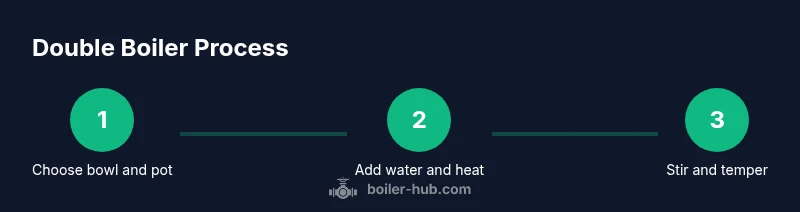
Choose the right bowl and pot
Select a heatproof bowl that fits over your pot with clearances for steam. Check that the pot has a sturdy bottom and wide enough opening to avoid spills. Test the fit dry before heating to ensure stability.
Tip: Test fit before heating to prevent tipping - 2
Add water and bring to a gentle simmer
Add enough water to create a steady steam underneath the bowl without touching the bottom. Bring water to a gentle simmer, not a rolling boil, to protect delicate ingredients from intense heat.
Tip: Keep an eye on water level and replace if it drops - 3
Position the bowl securely over the pot
Place the bowl on top of the pot so it sits stable and does not touch the water. Ensure there is space for steam to circulate and for you to lift the bowl safely.
Tip: Use heat resistant gloves when lifting - 4
Temper or melt ingredients with gentle stirring
Add ingredients gradually and stir continuously to prevent scorching. Maintain a calm, steady motion to promote even heat transfer and smooth texture.
Tip: Keep spatula in contact with the bowl’s interior to avoid hot spots - 5
Monitor heat and adjust as needed
If the mixture starts to look too thick or steam intensifies, reduce heat slightly. You want a consistent, gentle heat without water splashing into the bowl.
Tip: Have a small splash of water ready to adjust humidity - 6
Finish and remove safely
Once the task is done, carefully lift the bowl from the pot using a towel or heat resistant gloves. Transfer contents to a cool container and wipe both pieces dry.
Tip: Place the bowl on a dry, heat-safe surface immediately - 7
Clean and store your setup
Wash all parts with mild detergent and warm water. Dry thoroughly before storing in a dry area away from direct heat.
Tip: Address mineral deposits promptly to maintain performance
Questions & Answers
What is a double boiler used for in cooking
A double boiler provides indirect gentle heat, ideal for tempering chocolate, sauces, and emulsions. It prevents scorching by avoiding direct contact with heat.
A double boiler uses gentle indirect heat for delicate tasks like tempering chocolate and making sauces.
Can I improvise a double boiler with common kitchenware
Yes, you can improvise with a heatproof bowl over a pot, ensuring clearance and stability. Use nonreactive materials and monitor temperature carefully.
You can improvise with a heat proof bowl over a pot, but monitor temperature closely.
Is copper safe for double boiler
Copper is reactive and can transfer flavors when used for certain foods. Prefer stainless steel or glass for reliability in a double boiler.
Copper is reactive; stainless steel or glass is a safer choice.
Should I use a thermometer for tempering chocolate
A thermometer helps accurately temper chocolate and avoid overheating. Without one, monitor texture cues and proceed carefully.
Yes, a thermometer helps you temper chocolate accurately.
What foods benefit most from a double boiler
Delicate emulsions, custards, sauces like hollandaise, and melted chocolate benefit most from gentle heat.
Delicate sauces and chocolates benefit most from gentle heat.
Watch Video
Key Points
- Choose a bowl that fits securely over the pot
- Keep heat low and monitor steam
- Use nonreactive materials for best results
- Prefer a dedicated insert when possible
- Clean promptly to prevent residue buildup