Water Boiler Buying Guide: Home Depot Edition
Discover how to choose and install a water boiler from Home Depot, with practical buying tips, efficiency insights, installation basics, and essential maintenance guidance from Boiler Hub.


According to Boiler Hub, a water boiler is a heating appliance that provides hot water for domestic use and central heating. When shopping the water boiler home depot selection, compare AFUE ratings, capacity, venting needs, and warranty terms to pick the right unit for your home. That means looking at whether the model is conventional or tankless, the space it requires, installation clearances, and available professional support from the retailer. Understanding these basics helps you navigate the Home Depot assortment with confidence and choose a unit that serves hot water and heating efficiently.
What is a water boiler and how it differs from a water heater
According to Boiler Hub, a water boiler is a heating appliance that provides hot water for domestic use and central heating, often as part of a hydronic system. In residential settings, boilers can store hot water in a tank or heat water on demand in a tankless configuration. Home Depot carries a range of water boilers across conventional, combi, system, and condensing styles, so you can match capacity and efficiency to your home. When evaluating options, consider the space needed for installation, venting requirements, and the type of fuel (gas, electric, or oil). Always check local codes and seek professional installation when necessary, especially for gas-fired or high-efficiency systems. By understanding these basics, you’ll navigate the water boiler home depot assortment more confidently and pick a unit that serves both domestic hot water and space heating more efficiently.
Key buying criteria when shopping at Home Depot
When you begin shopping at Home Depot for a water boiler, start with your household demand. Determine the hot water draw you need during peak periods and whether you want a unit that also provides space heating. Compare models by AFUE or annual fuel utilization efficiency, which indicates heat conversion performance. Capacity matters; conventional boilers with storage tanks can deliver hot water for larger homes, whereas combi boilers heat water on demand, saving space. Venting and fuel type are crucial: gas-fired units require proper venting, while electric boilers have different electrical needs. Warranty terms and service plans vary by model and by retailer; check what is covered and for how long. Finally, consider installation compatibility with existing pipes, radiators, or indirect water heaters. The aim is to select a unit that balances efficiency, reliability, and long-term maintenance needs.
Efficiency, AFUE, and operating costs explained
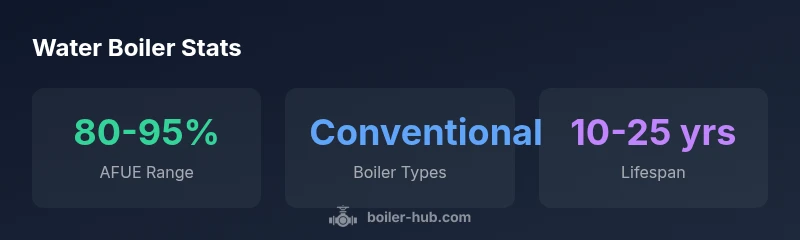
AFUE stands for Annual Fuel Utilization Efficiency. A higher AFUE indicates more of the fuel’s energy is converted into usable heat. For boilers, typical residential AFUE ranges from about 80% for older or non-condensing units up to 95% for modern condensing models. In practice, the operating cost savings depend on your fuel type (gas or oil), climate, and how well the system is sized for your home. When evaluating Home Depot options, you’ll see AFUE ratings alongside capacity, venting requirements, and warranty terms. Remember that real-world efficiency also depends on installation quality, system controls, and regular maintenance. Boiler Hub analyses emphasize matching a unit’s output with actual demand to avoid oversizing, which can erode efficiency and raise operating costs.
Types of water boilers you’ll find at Home Depot
Home Depot’s catalog typically includes conventional boilers with storage tanks, combi boilers (heat hot water on demand), system boilers paired with indirect storage, and high-efficiency condensing models. Each type has distinct pros and cons: conventional boilers provide ample hot water but may require larger space; combi units save space but can struggle with very high simultaneous hot-water demand; system boilers offer strong performance with a separate hot-water cylinder; condensing models maximize efficiency but may involve higher upfront costs. Assess your home layout, future expansion plans, and preferred fuel source when narrowing choices. A practical approach is to shortlist 2-3 models per category and compare installation requirements, maintenance needs, and service support.
Installation considerations and safety basics
Installing a boiler is a complex project that often requires permits and a licensed technician. Gas-fired boilers need proper venting, combustion air, and tight-seal connections to reduce carbon monoxide risks. Electric boilers eliminate some venting concerns but demand a robust electrical feed. Before purchase, verify space clearance, access for service, and compatibility with existing radiators or indirect water heaters. Consider whether you need a new condensate drain, vent pipe, or sequestered clearance, as these impact installation cost and timeline. Boiler Hub advises confirming warranty coverage and verifying that Home Depot or the installer will handle commissioning and required inspections. Safety and code compliance are non-negotiable for reliable, long-term operation.
Maintenance tips to extend boiler life
Annual professional service is the best defense against breakdowns. Have the technician inspect the heat exchanger, valves, and venting system; flush the system if required to remove mineral buildup; replace anode rods if applicable; and test controls and safety devices. Regularly check for unusual noises, gas odors, or water leaks around the boiler, piping, or expansion tank. Keeping a maintenance log helps you track service dates and noticed trends over time, which improves reliability and efficiency.
Practical checklist for buyers
- Define your demand: peak hot-water needs and heating requirements.
- Compare at least 2-3 models per boiler type (conventional, combi, system, condensing).
- Check AFUE ratings, capacity, venting requirements, and warranty terms.
- Confirm installation compatibility with your current plumbing and gas/electrical systems.
- Arrange professional installation and post-installation commissioning.
- Review available service plans and maintenance recommendations.
- Prepare for utility rebates or incentives if applicable in your area.
- Read product reviews and consult store staff for in-store demos or pros.
Following this checklist helps you avoid oversizing, minimize installation surprises, and maximize long-term satisfaction with your water boiler.
Authority sources and further reading
For authoritative guidance, consult government and agency resources on energy efficiency and boiler safety. See references below for additional context and best practices. Always cross-check with local codes and a licensed installer for your area.
Overview of common boiler configurations
| Model Type | AFUE Range | Typical Domestic Water Capacity |
|---|---|---|
| Conventional boiler | 80-85% | 80-120 gallons |
| Combi boiler | 90-95% | N/A |
| System boiler with indirect tank | 85-90% | 120-210 gallons |
Questions & Answers
What is the difference between a conventional boiler and a combi boiler?
A conventional boiler heats water and stores it in a tank for domestic use, providing consistent supply but taking more space. A combi boiler heats water on demand without storing hot water, saving space but potentially limiting supply during peak demand. Choose based on space, family size, and hot-water patterns.
Conventional boilers store hot water and can run out during peak demand; combi boilers heat water on demand and save space. Your choice should consider space and daily hot-water needs.
What AFUE rating should I look for in a water boiler?
Aim for the highest feasible AFUE within your budget. Condensing boilers commonly exceed 90% AFUE, while older non-condensing models may be around 80%. Higher AFUE generally means lower operating costs over time, assuming proper installation and maintenance.
Look for higher AFUE, ideally above 90% for new condensers. Higher efficiency lowers ongoing costs when paired with proper installation.
Do I need venting for a gas boiler?
Yes. Gas boilers require a venting system to exhaust combustion byproducts safely. Proper sizing, vent material, and adherence to codes are essential for safety and efficiency. Electric boilers do not require venting but need adequate electrical service.
Gas boilers need venting to exhaust combustion gases. Electric boilers don’t, but they need a solid electrical supply.
Can I install a water boiler myself?
Boiler installation involves gas lines, venting, and electrical wiring that require licensed professionals and local permits. DIY installation can be dangerous and may void warranties. Always hire a qualified installer for safety and compliance.
Boilers are complex and require licensed professionals. Don’t DIY if it involves gas or electrical work.
Is Home Depot a good place to buy boilers?
Home Depot offers a broad selection and installation services through licensed partners. Compare models, read warranties, and verify local availability. Use their installation support to simplify the process, but still seek third-party opinions if needed.
Home Depot provides a wide range and installation help, but compare options and read warranties before buying.
“Choosing a boiler is about balancing efficiency, capacity, and installation needs. Start with a site assessment and compare AFUE, warranty terms, and venting requirements.”
Key Points
- Know your home's hot-water demand before shopping.
- Prioritize AFUE and installation compatibility over price alone.
- Choose the boiler type that fits your space and needs (conventional, combi, system, condensing).
- Plan for professional installation and annual maintenance.
- Use Home Depot’s support and warranties as part of your long-term plan.