How to Use a Double Boiler to Melt Chocolate
Master the art of melting chocolate with a double boiler. Learn setup, temperature control, troubleshooting, and finishing tips for glossy, smooth chocolate without scorching or seizing.


Melt chocolate safely using a double boiler to achieve a glossy, smooth finish without scorching. This method relies on indirect heat from simmering water below, not direct flame. For best results, prepare a heatproof bowl, a sturdy pot, and finely chopped chocolate. According to Boiler Hub, steady, gentle heat and careful stirring are the keys to success.
What is a double boiler, and why use it?
A double boiler is two nested vessels that apply indirect heat through steam. The bottom pot holds simmering water, while the top bowl sits above it, warmed by the steam rather than direct contact with heat. This setup minimizes the risk of scorching chocolate and allows you to control the temperature with precision. For tasks like melting chocolate, this technique is preferred because it preserves gloss, prevents graininess, and yields a velvety texture. According to Boiler Hub, the secret to glossy, smooth chocolate is gentle, even heat and patience. When you melt chocolate this way, you create a stable environment that reduces the chances of seizing, especially if you’re adding liquids or cream later in a ganache.
A double boiler is also forgiving for beginners. You can remove the top bowl momentarily if the heat climbs too high, keeping the chocolate from overheating. This method is versatile enough for dipping, coating, or making ganache, and it scales from simple kitchen tasks to more elaborate desserts. The key is to maintain a steady, low temperature and to stir frequently to distribute the heat evenly.
Essential equipment and ingredients
Before you start, gather the basics. A sturdy pot that comfortably fits a heatproof bowl, a heatproof or metal bowl that sits above the pot, and a silicone spatula are essential. A thermometer helps you monitor temperature, while a knife or chopper ensures chocolate is evenly sized for uniform melting. Use good-quality chocolate that’s been chopped into uniform pieces to ensure even melting and to minimize lumps. If you’re making ganache or a recipe that requires liquids, have your cream or flavorings measured and ready. Clean workspace, dry bowls, and dry hands prevent moisture from causing seizing. Remember, chocolate hates water; even a few drops can cause clumping or graininess. A steady approach—low heat, gentle stirring, and correct bowl positioning—will yield consistently smooth results.
Temperature, chocolate types, and tempering basics
Different chocolates melt best at specific temperatures, and understanding this helps you avoid overcooking. Generally, dark chocolate melts at a slightly higher range, while milk and white chocolate melt more quickly and at lower temperatures. When using a double boiler, aim to keep the top bowl just above simmering water, not in direct contact with steam. If you’re tempering, you’ll work with precise ranges and cool-down steps; for simple melt-and-use applications, you can melt and proceed with your recipe. Keeping chocolate at a stable, moderate temperature helps prevent blooming and ensures a glossy finish. If you add cream or other liquids, do so with caution and incorporate gradually to maintain texture.
Melting chocolate: common mistakes and how to avoid them
The most common issues are scorching, seizing, and uneven melting. To avoid scorching, keep the water at a gentle simmer and never let the bottom of the top bowl contact the water. If the chocolate starts to seize or thicken, remove the bowl from heat briefly and stir to redistribute the heat. For best results, add any liquids gradually and whisk vigorously to emulsify. If you’re coating delicate items, tempering can improve the surface shine and snap, but it requires precision. Practice patience: chocolate melts faster near full melt, but overheating leads to dullness and a dull appearance. These mistakes are easier to prevent with a calm setup and attentive stirring.
Troubleshooting: seizing, blooming, and steam safety
Seizing happens when moisture or heat is mismanaged. If you see graininess or lumps, add a small amount of neutral oil or a bit more cream and whisk until glossy again. Blooming—an outward white film—occurs when chocolate is overheated or cooled too quickly; don’t panic: re-melt slowly to restore gloss, or start fresh if the bloom is extensive. Never allow water to splash into the top bowl; moisture is the enemy of melted chocolate. If steam builds up, lift the bowl slightly to release pressure and reduce heat. Keep your workspace dry and wipe down any condensation on the bowl. With careful attention, you can salvage most issues without discarding the entire batch.
Variations: tempering vs simple melting for different uses
Tempering yields a glossy finish with a satisfying snap, ideal for coating molds and candies. It requires precise temperature control and a brief cooling step to stabilize the cocoa butter crystals. If you’re not tempering, melt the chocolate until smooth and use promptly for ganache, fillings, or sauces. In ganache, the melt-and-stir method works well, and you can gradually blend warm cream into the melted chocolate. The key distinction is temperature management: tempering is more exact, while simple melting focuses on smooth consistency for immediate use. Practice both methods to determine which best fits your recipe and timing.
Cleaning, storage, and safety tips
After you finish, allow the bowl to cool before washing to avoid thermal shock to your kitchen tools. Wipe the pot and bowl with a dry cloth to remove any oil or residue, then wash with warm, soapy water. Store melted chocolate in a cool, dry place or refrigerate if you’re not using it immediately; if you’re tempering, ensure you follow your recipe’s guidelines for storage and handling. Remember: moisture and heat control are the biggest variables in chocolate work. With careful handling, a double boiler becomes a reliable ally for a wide range of desserts.
Tools & Materials
- heavy-bottomed saucepan(Large enough to hold a heatproof bowl with room to spare; 2-3 inches of water underneath)
- heatproof mixing bowl(Sturdy metal or glass bowl that fits snugly over the saucepan without touching the water)
- silicone spatula(Flexible, heat-safe, and easy to scrape sides of the bowl)
- digital thermometer or candy thermometer(Helpful for precise temperature control during tempering)
- chopped chocolate(Use evenly sized pieces for consistent melting (about 2–3 cups for most recipes))
- water(Only steam from simmering water; never let water touch the top bowl)
- towel or pot holder(To handle hot bowls safely)
Steps
Estimated time: 15-25 minutes
- 1
Prepare ingredients and equipment
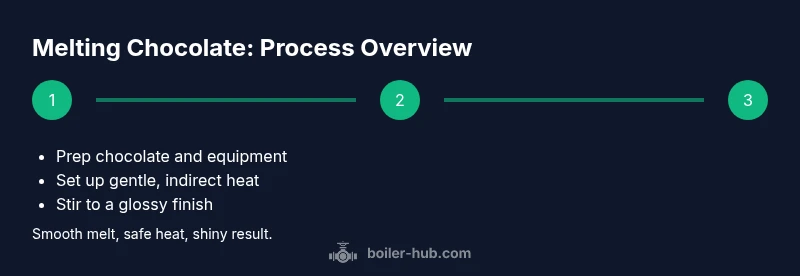
Chop chocolate into uniform pieces and lay out all tools within reach. Dry bowls thoroughly to prevent moisture from spoiling the melt. A well-prepared workspace speeds the process and reduces the chance of seizing.
Tip: Finely chopped chocolate melts more evenly than chunky pieces. - 2
Set up the double boiler
Fill the bottom pot with about 1-2 inches of water. Bring to a gentle simmer, then reduce heat to maintain a steady, small bubble. Place the top bowl over the pot, ensuring it sits above the water and doesn’t touch it.
Tip: Keep the bowl perched above the water line to avoid direct contact with steam. - 3
Add chocolate to the top bowl
Add the chopped chocolate to the top bowl. Stir gently with a silicone spatula as the chocolate starts to soften. Do not rush this step; gradual heat prevents scorching and improves texture.
Tip: Stir often to distribute heat evenly and prevent clumping. - 4
Monitor temperature and melt to smoothness
Continue stirring until the chocolate is almost completely melted and glossy. If tempering, monitor the exact temperature and adjust as needed. Remove from heat slightly before it fully melts; the residual heat will finish the melt.
Tip: Avoid overheating; chocolate can seize if exposed to too much heat. - 5
Finish and use
If using for ganache, pour over warm cream or incorporate other ingredients as required. For coating, let the melted chocolate cool slightly before dipping to prevent running or pooling.
Tip: Keep the final product at a workable temperature for best results. - 6
Clean up and store
Allow equipment to cool before washing. Store melted chocolate in an airtight container if not using immediately, or proceed with your recipe as planned.
Tip: Dry tools thoroughly to prevent moisture intrusion on future melts.
Questions & Answers
What is a double boiler and why is it used for melting chocolate?
A double boiler uses indirect heat from steam to melt chocolate gently, reducing the risk of scorching or seizing. It provides a controlled environment that helps achieve a smooth, glossy finish. This method is especially helpful for delicate tempering or when adding liquids to chocolate later.
A double boiler uses steam heat to melt chocolate slowly and safely, preventing scorching and seizing.
Can I melt chocolate directly on the stove without a double boiler?
Melt chocolate directly on the stove is possible but riskier. Direct heat can scorch or seize chocolate quickly, leading to a grainy texture. If you must, use very low heat and stir constantly, removing from heat as needed.
Melt chocolate directly on low heat, but you risk scorching and uneven texture.
What should I do if my chocolate seizes?
If chocolate seizes, start with a small amount of liquid (like warm cream or oil) and whisk vigorously to emulsify. If the batch is too far gone, start a new batch and gradually blend it in. Preventive steps include avoiding moisture and overheating.
If it seizes, add a little liquid and whisk; if troubled, start fresh and blend slowly.
Is tempering necessary for coating chocolates?
Tempering gives a glossy look and snap, ideal for coating or molding. If you’re making ganache or sauce, tempering isn’t strictly necessary, but it can improve texture and shine. Choose based on your final use and timing.
Tempering isn’t always required, but it improves shine and snap for coatings.
How do I clean a double boiler after use?
Wash both the pot and the bowl with warm, soapy water after they cool. Dry completely before storing. If you’re dealing with stubborn chocolate residue, soak briefly and scrub with a non-abrasive sponge.
Wash and dry the gear after use to keep it ready for next melt.
Key Points
- Melt chocolate with indirect heat to prevent scorching
- Keep equipment dry to avoid seizing and graininess
- Stir frequently for even melting and texture control
- Temper when glossy, snap-ready coatings are required
- Finish by cleaning and storing properly for future use