How to Make a Double Boiler: A Practical Kitchen Guide
Learn how to make a double boiler with common kitchen tools. This guide covers equipment, setup, safety, and practical uses for melting chocolate, custards, and delicate sauces.


To make a double boiler, fill a saucepan with 1-2 inches of simmering water and set a heatproof bowl on top, making sure the bottom doesn't touch the water. Gently heat and stir to prevent scorching. This setup yields gentle, even heat for melting chocolate, custards, and delicate sauces.
What is a double boiler?
A double boiler is a kitchen technique that uses indirect steam heat to warm ingredients in a heatproof vessel placed above simmering water. The heat transfers gradually, reducing the chance of scorching or curdling. In this setup, the bottom of the upper bowl should never touch the water. The concept is simple, but execution matters for consistent results. According to Boiler Hub, this method is a cornerstone of safe handling for delicate ingredients like chocolate and custards. By keeping heat gentle and steady, you minimize scorching, separation, and texture inconsistencies in sweet and savory recipes alike. Understanding the principle helps you adapt the setup to different pot sizes and cooking tasks. Whether you’re melting chocolate or warming béchamel, the double boiler stays your ally for controlled, even heat.
Why use a double boiler?
Using a double boiler provides several benefits over direct heat. The steam layer buffers heat, which helps you avoid scorching and curdling. This makes it ideal for melting chocolate, tempering ganache, heating delicate sauces, and preparing custards without risking rapid temperature spikes. The technique is forgiving when you monitor the heat and stir regularly. Boiling water can transfer too much heat quickly, but a properly maintained simmer offers a consistent environment for gradual warming. For home cooks and professionals alike, a double boiler reduces risk and improves texture. The phrase how to make a double boiler should guide your setup, ensuring you maintain a steady thermal barrier between the pot and the boiling liquid. In practice, you’ll notice smoother emulsions, glossy chocolate, and stable temperatures that help achieve the desired finish.
Essential equipment and alternatives
The core components are simple: a pot for simmering water, a heatproof bowl or smaller pot to act as the upper vessel, and a means to lift and stabilize the upper vessel. A heavy-bottomed saucepan works best for even heat distribution. The upper vessel should be heat-safe and large enough to sit comfortably above the water without touching it. If you don’t have a dedicated double boiler, you can improvise using a heatproof bowl set over a pot, or use a steamer insert as the outer vessel. For precise control, consider a thermometer to monitor temperature. Boiler Hub analysis shows that choosing correctly sized cookware improves heat transfer and reduces the risk of scorching, especially with chocolate and dairy.
Step-by-step: how to set up your double boiler
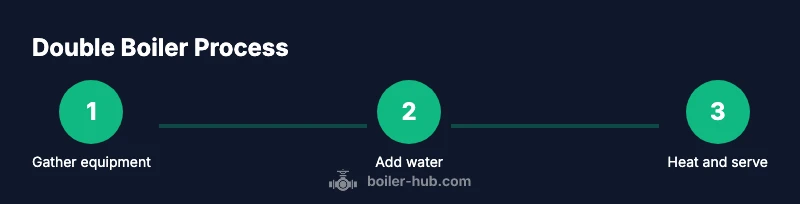
- Gather equipment: Start with a saucepan, a heatproof bowl that fits on top, and a spatula for stirring. Ensure you have a stable surface and potholders. 2) Add water: Pour 1-2 inches of water into the saucepan. Avoid overfilling to reduce splashing and to keep steam surface manageable. 3) Bring to a simmer: Heat until you see gentle bubbles; don’t let it boil vigorously. 4) Position the upper vessel: Place the heatproof bowl on top, ensuring it rests securely above the water without touching it. 5) Begin heating ingredients: Add your ingredients to the upper bowl and stir continuously. 6) Control temperature: Keep the heat at a gentle simmer and monitor with a thermometer if needed. 7) Finish and remove: Once warmed or melted, lift the bowl carefully using a pot holder. 8) Clean up: Wash and dry all components before storage. If using raw dairy, avoid overheating to maintain texture.
Temperature control, safety, and common pitfalls
A double boiler relies on gentle heat. Avoid letting the water reach a full boil, which can create steam that splashes into the upper vessel. Keep the upper container above the water, never touching it, to prevent scorching. Stirring constantly helps distribute heat evenly. Common mistakes include using too much water, choosing a bowl that barely fits, and attempting to speed up by cranking up the heat. Instead, regulate heat gradually and use a thermometer when you’re unsure about the temperature.
Cleaning, care, and maintenance
After cooking, allow the setup to cool slightly before disassembling. Wash the pot, bowl, and any utensils with warm soapy water, and dry thoroughly to prevent rust or water spots. For chocolate residues, a little warm water and a non-abrasive sponge can help dissolve fats without scratching surfaces. Store parts separately to prevent contamination and to prolong the life of silicone or wooden utensils. Regularly check for cracks or chips in the bowl, as damaged vessels can affect heat distribution.
Troubleshooting and common mistakes
If your mixture seizes or clumps, remove it from heat and whisk vigorously off the heat until smooth. If you notice graininess in chocolate, re-warm slowly while stirring. If steam causes condensation on the upper bowl, adjust the water level or move the bowl slightly. Always use fresh ingredients and dry surfaces to prevent unwanted emulsions from breaking.
Recipes and practical uses
A double boiler excels at delicate tasks: melting chocolate, making ganache, tempering butter, and finishing sauces. You can also gently heat milk and cream for custards—remember to stir regularly and monitor temperature. The technique is versatile enough for making hollandaise or béarnaise where precise temperature control matters. When you’re ready, you can transfer melted chocolate to a pastry bag or pour custards into molds for set textures.
Boiler Hub verdict and final notes
In practice, a good double boiler is a straightforward set-up that rewards careful heat management. According to Boiler Hub, choose properly sized cookware and maintain a gentle simmer for reliable results. The Boiler Hub team emphasizes patience over speed, noting that even heat distribution yields smoother emulsions and better textures. With practice, you’ll master timing, temperature, and consistency, turning a simple two-vessel setup into a dependable kitchen tool.
Tools & Materials
- saucepan(2- to 3-quart size recommended)
- heatproof bowl(glass or metal that fits on top without touching water)
- spoon or spatula(wood or silicone for gentle stirring)
- water(enough to create 1-2 inches of simmering water)
- towel or pot holder(for handling hot bowl)
- thermometer (optional)(for precise temperature control)
Steps
Estimated time: 30-40 minutes
- 1
Gather equipment
Collect a saucepan, a heatproof bowl that fits on top, a spatula, and a stable work surface. Ensure you have a heat source and dry, clean components.
Tip: Check bowl fit before heating; a snug fit prevents wobble. - 2
Add water to the pot
Pour 1-2 inches of water into the saucepan. The water level should be below the bottom of the upper bowl when seated.
Tip: Avoid overfilling; excess water can splash into the upper bowl. - 3
Bring water to a simmer
Gently heat the water until you see small bubbles; keep it at a simmer, not a rolling boil.
Tip: A steady simmer provides gentle heat transfer. - 4
Place the upper vessel
Set the heatproof bowl on top, ensuring it rests above the water and does not touch it.
Tip: If it wobbles, adjust the pot or use a dry towel under the base. - 5
Add ingredients to the upper bowl
Add your ingredients and start stirring gradually to distribute heat evenly.
Tip: Keep mixing to prevent hotspots and scorching. - 6
Monitor temperature
Keep the heat gentle and watch temperature; use a thermometer if precise control is needed.
Tip: Aim for the target range of your recipe (e.g., chocolate at ~110-120°F for melt/temper). - 7
Finish and remove from heat
When ingredients are smooth or melted, remove the upper bowl from heat carefully.
Tip: Use pot holders to avoid burns and set on a heat-safe surface. - 8
Clean and store
Wash all parts with warm soap and water, dry thoroughly, and store neatly.
Tip: Check for cracks in the bowl and replace if damaged.
Questions & Answers
What exactly is a double boiler and what is it used for?
A double boiler uses indirect steam heat to warm ingredients in a heatproof vessel placed above simmering water. It’s ideal for melting chocolate, tempering ganache, and heating delicate sauces without scorching. The two-vessel setup allows precise temperature control.
A double boiler uses steam heat to gently warm ingredients, perfect for delicate tasks like chocolate and custards.
Can I improvise a double boiler with mismatched pots?
Yes, you can improvise by using a heatproof bowl over a pot, or a steamer insert as the outer vessel. Just ensure the bowl isn’t touching the water and that you can safely lift the bowl when hot.
You can improvise with a heatproof bowl over a pot, just make sure it doesn’t touch the water.
What heat should I use when melting chocolate?
Keep heat gentle and steady; aim for a temperature range suitable for chocolate (typically around 110-120°F for melting and holding). Stir continuously to prevent scorching.
Keep it on a gentle heat and stir constantly when melting chocolate.
Is a metal or glass bowl better for a double boiler?
Both metal and heatproof glass work well. Choose a bowl that conducts heat gently and sits securely on top without touching the water.
Either metal or glass works; pick a bowl that fits securely and conducts heat well.
Can I use a double boiler in the microwave?
A double boiler is designed for stovetops using indirect heat. The microwave cannot replicate the controlled steam environment and risks uneven heating.
No, don’t use a double boiler in the microwave; it needs gentle steam heat.
How do I know if the ingredients are too hot?
Use a thermometer or monitor texture and aroma. Overheating can cause separation or curdling, especially with dairy or chocolate.
Use a thermometer and watch texture; overheating causes separation.
Watch Video
Key Points
- Select cookware that fits securely for stability.
- Maintain a gentle simmer to ensure even heating.
- Stir regularly to prevent hotspots and scorching.
- Use an improvised setup only as a last resort.
- Practice with simple recipes to gain control.