How to Get Hot Water Without a Boiler
Learn safe, practical ways to get hot water without a central boiler. Explore electric point-of-use, solar, and heat-pump options, plus setup tips for homes and facilities.


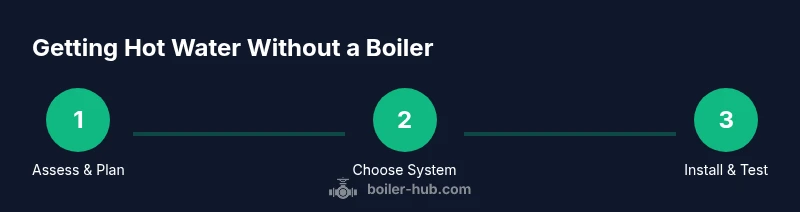
Goal: how to get hot water without a boiler by exploring electric point-of-use heaters, solar water heating, heat-pump solutions, or portable heating methods. Key requirements include safe electrical circuits, proper storage or transfer of heated water, and compliance with local codes. This step-by-step guide helps homeowners and facility managers pick the right method and install it safely.
Why you might need hot water without a boiler\n\nAccording to Boiler Hub, boiler downtime, maintenance bottlenecks, or a strategic shift away from a central boiler can leave households and facilities without reliable hot water. This reality is common in apartments, small offices, and retrofit projects where space, budget, or schedule constrain boiler use. Beyond outages, many building owners explore alternatives to improve resilience, cut long-term operating costs, or reduce carbon footprints. The decision to pursue hot water without a boiler should balance safety, reliability, and ease of ongoing maintenance. This section explains practical paths you can take now, with safety and efficiency front and center.
Alternatives to a central boiler\n\nThere are several viable paths to hot water that don’t rely on a single central boiler. Electric point-of-use (POU) heaters deliver hot water right where you need it, minimizing heat loss and simplifying installation. Solar water heating can preheat water using sun exposure, sometimes paired with a backup heater. Heat pump water heaters extract ambient heat from the air to warm water, offering strong efficiency in moderate climates. Portable electric kettles or immersion heaters are handy for occasional bursts of hot water, such as for dishwashing or quick showers. Hybrid approaches—combining solar, heat pumps, and small electric heaters—can offer reliable, energy-smart performance. When evaluating options, consider available space, electrical capacity, climate, and local codes.Boiler Hub analysis highlights that homes with diverse hot-water needs benefit from modular solutions that scale with demand.
How to choose the right solution for your home or facility\n\nChoosing the best approach depends on usage patterns, climate, and existing electrical capacity. Start by listing your daily hot-water tasks (showering, dishwashing, laundry), number of users, and peak times. For small units or apartments, electric POU heaters are often quickest to deploy. In sunny climates, solar water heating pairs well with a backup electric heater. In regions with mild weather and good insulation, a heat-pump water heater can offer lower operating costs. Ensure the solution fits your space, complies with local electrical or plumbing codes, and aligns with long-term maintenance plans. The right choice balances convenience, safety, and total cost of ownership.
Installation basics and safety reminders\n\nInstallations should prioritize safety and code compliance. If you’re working with gas lines or complex electrical upgrades, hire licensed professionals. Always use anti-scald devices or thermostatic mixing valves to prevent burns, and set storage temperatures to a safe range. Maintain proper venting for gas appliances and ensure adequate clearance for any equipment. Regularly inspect connections, seals, and insulation to minimize heat loss and water leaks. Use dedicated circuits sized for the heater’s wattage and install shutoff valves for maintenance. Finally, verify that all components are compatible with local codes and your home’s water quality.
Practical setup scenarios\n\nScenario A: Small apartment without a boiler. Install a compact electric point-of-use heater under the sink or near the shower, with a dedicated 15–20 A circuit and a thermostatic mixing valve for safe delivery. Scenario B: Off-grid or cloudy climates. Combine a solar water heating system with a small electric backup heater for cloudy days and evenings. Scenario C: Home with an aging boiler. Add a solar preheat or heat-pump unit to reduce boiler load and use the boiler only for peak demand or backup. Each setup should include proper shutoffs, temperature controls, and regular maintenance routines.
AUTHORITY SOURCES\n\n- https://www.energy.gov/energysaver/water-heaters\n- https://www.eia.gov/energyexplained/\n- https://www.nrel.gov/energy-resystems.html
Tools & Materials
- Electric point-of-use water heater(Under-sink or wall-mounted unit; match wattage to circuit capacity (typically 3–6 kW).)
- Dedicated electrical circuit and breaker(Ensure a separate circuit sized for the heater; consult an electrician if upgrading electrical service.)
- Anti-scald/thermostatic mixing valve(Prevents scalding by mixing hot water with cold before it reaches taps.)
- Temperature/pressure relief valve(Codes require; prevents overpressure in storage or heater tank.)
- Piping with shutoff valves(Isolate equipment for maintenance and safe installation.)
- Insulation for hot-water lines(Reduces heat loss and improves efficiency.)
- Tools: screwdriver, adjustable wrench, thread sealant(For secure, leak-free connections.)
Steps
Estimated time: 60-120 minutes
- 1
Assess needs and select a path
List daily hot-water tasks, number of users, and peak times. This determines whether a POU electric heater, solar preheat, or a heat-pump system best fits your home or facility.
Tip: Begin with a quick audit of your water usage to avoid over- or under-sizing the system. - 2
Check electrical and space constraints
Measure available wall space and verify circuit capacity. A licensed electrician can confirm whether your electrical panel can support the new heater or if upgrades are needed.
Tip: Prioritize dedicated circuits to prevent overloading and ensure safe operation. - 3
Choose the first equipment and install
Install the chosen heater in the designated location, connect to cold supply and hot outlet, and attach the anti-scald valve. Follow the manufacturer’s instructions and local codes.
Tip: Use a shut-off valve during installation for easy maintenance. - 4
Set temperature and test for safety
Configure the thermostat to a safe range (commonly around 120°F/49°C), and run water to verify consistent heat without scalding. Check for leaks at all joints.
Tip: Document tested temperatures and keep a written maintenance plan. - 5
Install backup or supplementary methods
If you chose a hybrid approach, install solar preheat or a heat-pump unit to support the main heater. Ensure proper venting and electrical coordination.
Tip: Plan for seasonal variations and have a backup ready for winter months. - 6
Monitor, maintain, and review
Set a routine to inspect valves, insulation, and connections every 6–12 months. Reassess demand if occupancy changes.
Tip: Keep a log of inspections and any replacements.
Questions & Answers
Can I heat water without a boiler in a rental property?
Yes. Portable or installed alternatives like a point-of-use heater can provide hot water without altering the building’s central system. Ensure you have landlord permission and comply with safety codes.
Yes, you can use portable or installed alternatives in a rental, but check with the landlord and follow safety rules.
Is solar water heating viable in cold or cloudy climates?
Solar water heating can still work in many climates with proper storage and backup. Efficiency improves with well-insulated tanks and collectors, and some systems include backup electric heaters for cloudy days.
Solar works in many climates if you have a backup and good storage.
Do I need permits to install a new heater or modify plumbing?
Often yes. Local codes may require electrical or plumbing permits. Check with your city or county building department and hire licensed professionals as needed.
Permits are often required; check with local authorities and hire pros if needed.
What temperatures are considered safe for hot water?
A common safe target is around 120°F (49°C) to balance comfort and reduce scald risk. Use thermostatic valves to maintain steady temperatures at taps.
Most people set hot water to about 120 degrees Fahrenheit to avoid scalding.
Can I do this myself without hiring a professional?
Some smaller installations may be DIY, but electrical and gas work typically requires a licensed professional to meet safety codes and warranty requirements.
For safety and code compliance, consider hiring a licensed pro for electrical or gas work.
What are the ongoing operating costs of alternatives?
Costs vary by method and region. Electric POUs may increase electricity use, while solar or heat-pump systems can reduce ongoing energy bills but require higher upfront investment.
Costs depend on the method; solar and heat pumps save energy but cost more upfront.
Watch Video
Key Points
- Identify a safe, scalable alternative to a boiler (POU, solar, or heat pump).
- Prioritize electrical safety and necessary permits before installation.
- Set hot-water temperature to a safe level to prevent scalding.
- Opt for modular solutions that can grow with demand.
- The Boiler Hub team recommends consulting a licensed professional for any electrical or gas work.