How Boiler Feed Water Is Produced
Learn how boiler feed water is produced, treated, and monitored to keep boilers efficient and safe. This guide covers sources, treatment steps, chemistry controls, and routine checks for reliable steam generation.


This answer explains how boiler feed water is produced and prepared for safe boiler operation. You’ll learn the sources of feed water, the typical treatment sequence, and the checks used to maintain quality and prevent corrosion and scaling. By understanding the flow from source to feed tank, you’ll see how designers balance cost, reliability, and performance.
What is boiler feed water and why it matters
According to Boiler Hub, boiler feed water is the water that enters the boiler to be heated into steam. The quality of this water directly influences heat transfer efficiency, corrosion rates, and scale formation on heat exchange surfaces. Poor feed water chemistry can lead to scale buildup, accelerated corrosion, and increased energy use. Effective feed water management starts with clean input water, reliable treatment, and ongoing monitoring.
In most plants, feed water comes from two main streams: make-up water, which replaces water lost to steam, and condensate returns, which recycles hot condensate from the steam system. The condensate is typically purer than makeup water, so recovering it reduces makeup water demand and chemicals. The aim is to supply water that is low in impurities, has controlled alkalinity, and minimal dissolved gases. The treatment train balances cost, reliability, and the specific boiler type.
Primary sources of boiler feed water
The two largest sources of boiler feed water are makeup water and condensate returns. Makeup water supplies fresh input and often requires conditioning to remove suspended solids, dissolved minerals, and gases before entering the system. Condensate returns reclaim thermal energy and carry less dissolved solids, but may still contain dissolved oxygen, carbon dioxide, and trace organics.
Some plants also utilize recycled or treated process water streams, particularly in systems with multiple boilers or district heating networks. The choice of source depends on local water quality, plant chemistry targets, and the risk of corrosion or scaling. Water chemists assess feed water quality at the point of entry to the boiler house and set targets for dissolved solids, alkalinity, and gas content that align with boiler design and operating pressure. Proper source management reduces chemical consumption and extends component life.
Typical treatment train for boiler feed water
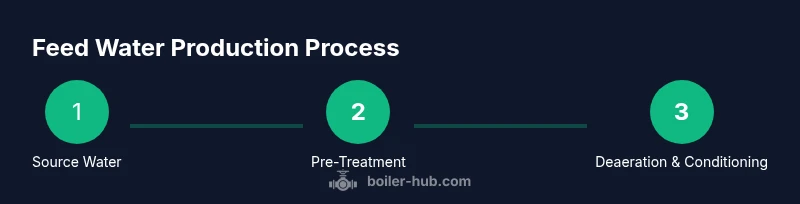
Before water enters the boiler, it passes through a treatment sequence designed to remove impurities and adjust chemistry. A typical train includes pretreatment (filtration, softening or reverse osmosis), deaeration to remove dissolved gases, followed by conditioning with chemicals and, if needed, ion exchange or polishing to reduce ionic content. The order matters: removing solids early minimizes fouling downstream, while deaeration protects against oxygen-driven corrosion. The final feed water should have low oxygen content, controlled pH/alkalinity, and reduced mineral load to avoid scale.
This sequence is tailored to the boiler type and operating pressure, balancing treatment cost with reliability. Operators track water chemistry trends and adjust the treatment train as feed water quality varies seasonally or with source changes.
Critical chemistry controls
Chemistry controls focus on maintaining protective scale-free surfaces and minimizing corrosion risk. Key factors include keeping alkalinity at a level that protects metal surfaces without promoting foaming, limiting dissolved solids to prevent scale, reducing silica and chlorides to avoid deposition in boiler tubes, and keeping oxygen at near-zero levels. Operators monitor conductivity as a quick proxy for overall ionic content and run periodic full water analyses to verify individual ion levels. Consistent control prevents unexpected changes that can trigger maintenance shutdowns.
The exact targets depend on boiler design, steam demand, and materials used. Regular reviews of feed water chemistry help ensure long-term equipment integrity and efficiency.
Quality checks and monitoring
Quality checks occur continuously and at defined intervals. Operators monitor feed water temperature, flow rate, and pressure, and take representative samples for laboratory analysis. Inline sensors track conductivity and dissolved oxygen, while periodic tests assess silica, carbonate, and sulfate/hydroxide balance. A record of readings supports trending and early warning of chemistry drift. By maintaining up-to-date records and following the plant's standard operating procedures, facilities minimize unplanned downtime and extend boiler life.
Advanced plants use automated control systems to adjust dosing and valve positions in real time, reducing manual intervention and ensuring consistent feed water quality.
Troubleshooting common issues
Common feed water issues include scale formation, corrosion indicators, foaming, carryover of treatment chemicals, and unexpected conductivity shifts. Scale deposits reduce heat transfer efficiency, while corrosion signs indicate aggressive water chemistry or poor deaeration. Foaming can signal organic contaminants or incorrect chemical dosing, and carryover can lead to downstream equipment fouling. In many cases, adjusting pretreatment settings, improving deaeration, or revising chemical dosing resolves problems. Regular diagnostics help catch issues before they escalate.
Well-documented change controls and a clear escalation path help operators respond quickly to unexpected readings and keep the system in balance.
Integration with plant operations and maintenance
Effective feed water management integrates with overall plant operations. Routine calibration of sensors, scheduled maintenance of deaerators and pumps, and consistent chemical inventory management support stable boiler performance. Operators coordinate with maintenance teams to reduce downtime during chemical changes or equipment servicing. Establishing a clear responsibilities matrix and documented procedures ensures that the feed water program stays aligned with safety, regulatory, and reliability goals. The Boiler Hub team emphasizes proactive monitoring and regular reviews to keep the system in balance.
Tools & Materials
- Make-up water source (municipal supply, wells, or treated process water)(Ensure supply meets local regulations and is compatible with plant chemistry targets.)
- Condensate return line(Maintain clean, insulated lines to minimize energy loss and contamination.)
- Pumps and piping suitable for boiler feed service(Size and material chosen for operating pressure and flow.)
- Filtration system (pre-filter cartridges or media)(Capable of removing suspended solids to protect downstream equipment.)
- Deaerator or deaerating boiler feed water heater(Oxygen removal is critical for corrosion control.)
- Water softener or demineralizer (ion-exchange or RO)(Reduces hardness and ionic load to prevent scale.)
- Chemical dosing system (oxygen scavenger, pH adjuster, anti-foaming agent)(Follow supplier guidelines and safety data sheets.)
- Inline sensors for conductivity, DO, pH(Continuous monitoring of key chemistry parameters.)
- Laboratory sampling supplies(Used for periodic full analyses to validate inline readings.)
- Maintenance tools (wrenches, testing kits, calibration kits)(Keep equipment ready for routine servicing.)
Steps
Estimated time: 60-90 minutes
- 1
Assess water sources
Identify available makeup water and condensate return quality. Confirm local water chemistry, seasonal variations, and boiler design requirements. Establish targets for dissolved solids, alkalinity, and gas content before starting treatment.
Tip: Document source quality and any anticipated changes in supply. - 2
Prepare pretreatment
Set up filtration and softening or RO as needed. Ensure pretreatment configuration minimizes solids entering the deaerator and reduces chemical demand later in the train.
Tip: Verify filter integrity and resin status before flows increase. - 3
Operate deaeration system
Start deaerator or deaerating feed water heater to remove dissolved oxygen and CO2. Maintain venting and monitor vent exhaust for proper operation.
Tip: A failed deaerator is a common cause of unexpected corrosion. - 4
Dose conditioning chemicals
Introduce oxygen scavenger, pH adjuster, and anti-foaming agents per the planned chemistry. Control dosing with feedback from sensors and periodic lab checks.
Tip: Do not over-dosage; start conservative and adjust based on readings. - 5
Test water chemistry
Take representative samples and analyze alkalinity, hardness, silica, chlorides, and DO. Compare with targets and adjust dosing or treatment steps as needed.
Tip: Maintain a log of all test results and actions taken. - 6
Manage feed water loop
Fill the feed water loop, monitor flow and pressure, and inspect for leaks or abnormal noises. Ensure continuous operation and readiness for peak demand.
Tip: Schedule routine inspections to catch problems early.
Questions & Answers
What is boiler feed water and why is it important?
Boiler feed water is the water that enters the boiler to be heated into steam. Its quality affects corrosion, scaling, and heat transfer efficiency. Proper treatment reduces maintenance needs and extends boiler life.
Feed water is the water going into the boiler; its quality matters for corrosion, scaling, and efficiency.
How does deaeration protect the boiler?
Deaeration removes dissolved oxygen and carbon dioxide from the feed water, minimizing corrosion risk inside boiler tubes and steam circuits.
Deaeration removes gases that can cause corrosion in the boiler.
What are common signs of feed water problems?
Common signs include abnormal scale, foaming, changes in conductivity, and unexpected corrosion indicators. These suggest chemistry drift or equipment issues.
Watch for scaling, foam, or odd readings; they point to water chemistry problems.
How often should water chemistry be tested?
Water chemistry should be tested regularly according to SOPs, with periodic laboratory analyses to validate inline sensors.
Regular tests and lab checks help catch drift before it affects the boiler.
Can condensate alone meet feed water requirements?
Condensate returns are valuable but usually require makeup water conditioning to meet full feed water targets, depending on plant design.
Condensate is good, but most plants still need makeup water conditioning.
What safety considerations apply to boiler feed water?
Follow plant safety procedures for chemical handling, venting, and pressure systems. Proper PPE and training are essential.
Always follow safety rules when handling water treatment chemicals and boiler systems.
Watch Video
Key Points
- Know feed water sources and how they influence boiler health
- Use a logical treatment train to minimize manual work
- Monitor chemistry continuously to prevent surprises
- Coordinate water treatment with maintenance for reliability