Does a Boiler Heat Water? A Homeowner's Guide 2026
Understand how boilers heat water for space heating and domestic use. Learn about combi, system, and regular boilers, temperature safety, maintenance tips, and when to upgrade for better efficiency.


Does boiler heat water? In almost every typical home heating setup, yes. A boiler’s primary job is to heat water for space heating and domestic hot water. Depending on the system, this water may be produced on demand (combi) or stored in a cylinder for taps and radiators (system or regular). Understanding your boiler type helps you optimize comfort and efficiency.
How boilers heat water
According to Boiler Hub, the question of whether does boiler heat water sits at the core of most residential heating systems. A boiler heats water by burning fuel (such as natural gas or oil) or using electricity, transferring that energy through a heat exchanger to the water circulating in pipes. The heated water then travels through radiators, baseboards, or underfloor loops to deliver warmth to living spaces. In parallel, many homes rely on the same system to produce domestic hot water (DHW) for sinks, showers, and appliances. How the DHW is produced depends on the boiler type. Some boilers heat DHW on demand, others heat and store DHW in a cylinder, and a few mix both approaches. Keeping these distinctions clear helps homeowners troubleshoot issues and choose the right equipment for future upgrades.
Boiler types and hot water delivery
Boilers come in several configurations, and your approach to heating water changes with each type. A combi (combination) boiler heats DHW on demand, which means there is no storage tank for hot water. It taps water as you open a faucet, delivering a steady stream when needed. System boilers, paired with a hot water cylinder, store DHW for taps and showers while providing space heating via a separate circuit. Regular or conventional boilers also heat water to fill a storage cylinder, but the system relies on a separate tank in the loft or pressurized storage. Each setup has trade-offs: combi boilers save space but may struggle during peak demand, while storage-based systems offer ample hot water but require more space and regular cylinder maintenance.
Temperature targets and safety controls
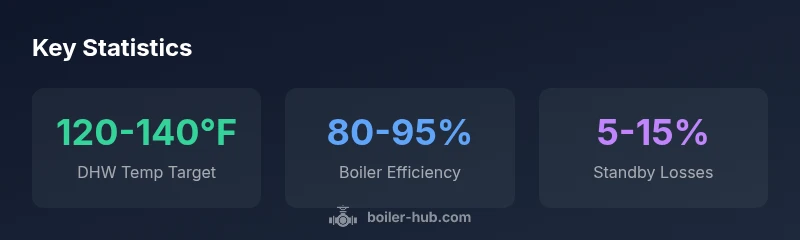
Water temperature affects both comfort and safety. A common DHW target range is 120°F to 140°F (49°C to 60°C). Keeping water within this range minimizes scalding risk for households with children or elderly residents, while still delivering hot taps quickly. For homes with children or high-temperature concerns, install a thermostatic mixing valve to regulate mixed temperature at the tap. Space heating temperatures are typically governed by the boiler’s room thermostat and boiler flow temperature, which should be set to balance comfort with energy usage. Regularly checking the mixed temperature and adjusting controls can prevent overheating and improve overall system efficiency.
Efficiency and energy considerations
Efficiency in heating water isn’t just about the boiler itself. Sizing matters: a boiler that’s too large may cycle on and off too frequently, wasting fuel, while an undersized unit struggles to meet demand. Condensing boilers capture more energy by recovering latent heat from exhaust gases, pushing efficiency toward the higher end of the range. Maintaining proper pressure, filtering, and clean heat exchangers also keeps the system running near its rated efficiency. In practice, even with a modern boiler, comfort and efficiency hinge on correct installation, appropriate pipe sizing, and well-tuned controls.
Maintenance tips to keep water hot efficiently
Regular maintenance makes a big difference in how reliably a boiler heats water. Schedule an annual service with a qualified technician to inspect combustion efficiency, check for leaks, test safety devices, and verify the pressure is within the recommended range. Bleed radiators to remove air that can reduce hot water delivery, and drain and flush the system if you notice sludge buildup. For storage-based systems, regularly inspect the hot water cylinder and expansion tank to prevent pressure fluctuations that can affect water temperature and system longevity. Small, proactive steps save energy and extend boiler life.
Troubleshooting common water-heating issues
If hot water is inconsistent or takes too long to appear, several factors could be at play: incorrect temperature settings, oversized or undersized boiler, a faulty diverter valve, or sediment buildup in storage cylinders. For combi boilers, a weak flow might indicate a restricted hot water path or pressure problems. For heat-only systems, check the cylinder’s insulation and ensure the storage tank is heated efficiently. When in doubt, a professional service visit can diagnose and correct these issues, ensuring safe and efficient hot water delivery.
When to upgrade or replace your boiler
Older boilers, especially those past 15–20 years, tend to be less efficient and more prone to failures. If your bills are rising, maintenance costs are increasing, or you’re upgrading to a more demanding home, replacement with a high-efficiency model can yield energy savings and improved DHW reliability. Before replacing, have a qualified technician perform a heat-loss calculation, confirm the correct boiler size, and discuss condensing options to maximize energy performance. A well-chosen upgrade aligns heating water needs with modern efficiency standards.
How to choose the right boiler for your home
Selecting the right boiler involves evaluating DHW demand, space availability, fuel type, and desired efficiency. Steps include: 1) estimate peak hot water usage; 2) determine space for a storage cylinder if using a system or regular boiler; 3) compare combi vs stored DHW scenarios; 4) prioritize high-efficiency condensing models; 5) consider boiler compatibility with smart thermostats; 6) budget for installation and potential future upgrades. Consulting Boiler Hub resources and a local installer can help tailor the best solution for your home.
How different boiler types deliver hot water
| Boiler Type | Domestic Hot Water Supplied | Common Configuration |
|---|---|---|
| Combi boiler | On-demand hot water | No storage cylinder |
| System boiler | Stored hot water | Hot water cylinder + heating circuit |
| Regular boiler | Stored hot water | Hot water cylinder with cold water storage tank |
Questions & Answers
Does a combi boiler heat water on demand?
Yes. A combi boiler heats water directly from the mains when you open a tap, so there’s no storage cylinder. This minimizes space needs but can limit simultaneous hot water flow.
Yes—combi boilers heat water on demand, with no storage tank required.
Do all boilers heat domestic hot water?
Most boilers provide DHW, either by heating water on demand (combi) or by heating water stored in a cylinder (system or regular). Some systems may be dedicated to space heating if DHW is supplied elsewhere.
Most boilers can heat domestic hot water, either on demand or from storage.
What temperature should my hot water be set to?
A common target is 120°F to 140°F (49°C to 60°C). Adjust for comfort and safety; install a thermostatic mixing valve if needed to prevent scalding.
Aim for about 120 to 140 degrees Fahrenheit, depending on safety and comfort.
Why is my hot water weak or inconsistent?
Causes can include incorrect boiler sizing, pressure issues, faulty diverter valves, or sediment in storage tanks. Have a technician check boiler pressure and system components.
Weak hot water can be due to sizing, pressure, or valve issues—get it checked.
How often should I service my boiler?
Annual service is recommended to maintain efficiency, safety, and reliable hot water delivery. More frequent checks may be needed in older systems.
Most boilers benefit from a yearly professional service.
“Knowing how your boiler heats water is the foundation for efficient heating and safe hot water. With proper sizing and regular maintenance, you can improve comfort while cutting energy use.”
Key Points
- Know your boiler type to predict hot water delivery.
- Target DHW temperature around 120-140°F for safety and comfort.
- Modern condensing boilers offer higher efficiency when properly sized and maintained.
- Regular maintenance boosts efficiency and longevity.
- Consider a storage cylinder if you need high simultaneous hot water demand.
- Upgrade to a high-efficiency boiler when replacing an old system.