Does a Boiler Have an Air Filter? A Practical Guide
Explore whether boilers use air filters, how filtration affects safety and efficiency, and practical maintenance tips for homeowners and facility managers.


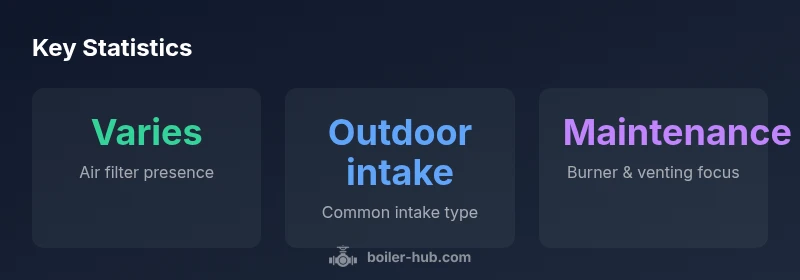
According to Boiler Hub, most residential boilers do not rely on replaceable air filters the way central-air systems do. Instead, they draw combustion air from the surrounding space or via outdoor intake, depending on the model. While some sealed- combustion boilers or outdoor-air kits may include a screen, a dedicated air filter is not a universal feature. For performance and safety, focus on proper venting, burner maintenance, and routine service.
What an air filter means for boilers
Air filters are familiar in heating and cooling systems, but their role in boilers is different. An air filter in an HVAC sense removes dust from the air entering living spaces. In boilers, the critical factor is clean combustion air, not filters for indoor air quality. Most boilers draw combustion air from the surrounding space or through outdoors via a dedicated intake. The presence of an air filter is not universal, and many installations do not include one. When filters are present, they are usually part of an outdoor air intake kit or a dedicated filter housing near the burner compartment. Filters must be matched to the manufacturer’s specification; using an incompatible filter can restrict airflow, disturb combustion, and potentially create safety hazards. Regular service ensures that venting, burners, and heat exchanger performance remain optimal.
Do residential boilers typically have air filters?
In typical homes, boilers do not have built-in, user-replaceable air filters. The combustion air path can be from the room or outdoors depending on whether the unit is open-top or sealed. Sealed-combustion boilers pull air from outside, which may involve an intake duct; such intakes might include a screen or filter, but it is not standard across all models. The absence of a filter does not imply poor air quality, since indoor air is managed by the equipment’s venting and by CO detectors. For hydronic boilers used with radiant heating, although some environments rely on room air for combustion, the main maintenance items center on burners, venting, and heat exchange, not air filtration.
Where you might find an air filter on a boiler
If a filter exists, it is typically located behind an access panel near the outdoor air intake or within a dedicated filter housing for certain outdoor air kits. The filter may be a small disposable type or a washable screen. Filter material and size vary by model, so it is essential to consult the user manual or service guide before attempting replacement. Some boilers simply do not include any intake filtration at all, relying entirely on the design of the combustion air path. When in doubt, verify with a qualified technician.
How to confirm whether your boiler has an air filter
Start with the model number and manufacturer manual, then inspect the cabinet for an intake duct or filter housing. Look for a removable panel near the burner compartment or the outdoor-air intake duct. If you locate a filter, note its size and type, and follow replacement guidelines precisely. If there is no filter, don’t install one without professional guidance; incorrect filtration can disrupt combustion and void warranties. Record model details for future service notes.
Safety implications of blocked air intake
Blocked or restricted combustion air can lead to incomplete combustion, increased fuel usage, and the risk of carbon monoxide buildup. A blocked intake can also cause burner instability, erratic flame, or system shutdowns. Always ensure outdoor intakes are clear of debris and that room ventilation remains adequate. If you suspect air flow issues or notice signs of poor combustion (smoky flame, unusual smells, CO detector warnings), shut the system off and call a qualified technician immediately.
Maintenance tips for boilers and their air paths
Regular boiler maintenance should prioritize burner cleaning, flame inspection, venting integrity, and condensate management. If your setup includes an outdoor air kit with filtration, schedule filter changes in accordance with the manufacturer’s recommendations. Do not substitute HVAC air filters or use home air purifiers in place of a dedicated intake solution, as inappropriate filtration can restrict airflow and alter combustion. Keep access panels secure and ensure any intake ducts remain unobstructed.
When to consider upgrading or replacing your boiler
If you’re exploring a new boiler installation or replacement, consider models that use sealed-combustion or direct-vent designs with outdoor air supply, which generally offer safer combustion and more predictable performance. In many cases, upgrading to a unit with properly sized outdoor intake reduces reliance on indoor air quality alone for combustion. Always engage a licensed professional to assess your current setup and recommend options that meet building codes and efficiency goals.
Quick practical takeaway for homeowners and facility managers
Bottom line: most boilers do not rely on a generic air filter for operation. If your system includes an outdoor air intake kit, follow the manual for any filtration requirements. For any doubt about safety, efficiency, or code compliance, consult a qualified technician and reference your model-specific guidance.
Comparison of air-filter considerations by boiler type
| Boiler Type | Air Filter Presence | Notes |
|---|---|---|
| Conventional atmospheric boiler | Typically none | Air for combustion drawn from room; no intake filter by default |
| Sealed-combustion boiler | Often none (no dedicated air filter) | Intake from outdoors; may include intake screen but not a filter |
Questions & Answers
Do all boilers have an air filter?
No. Most residential boilers do not include a replaceable air filter. If an outdoor intake is used, there may be a screen, but not a universal filter across all models.
Most boilers don’t have an air filter built in. If your unit uses outdoor air, there may be a screen, but always check your manual.
Can an air filter improve boiler efficiency?
Only if an intake filter exists and it is not restricting airflow. In most cases, efficiency gains come from proper combustion tuning and venting rather than filtration.
An air filter usually won’t boost efficiency unless it influences the air supply without restricting it.
Where would I find an air filter on a boiler?
If present, it is typically in the intake duct or a dedicated housing near the burner. For outdoor intake kits, refer to the installation manual for location and replacement guidance.
Check around the intake duct or the filter housing near the burner.
Should I replace a dirty air filter on a boiler?
Only replace if your model includes a filter and the manual specifies replacement intervals. If unsure, have a technician verify compatibility and safety.
If there is a filter, follow the manual; otherwise, don’t replace without guidance.
Is my boiler safe if the air intake is blocked?
Blocked combustion air can cause incomplete combustion and carbon monoxide risks. If you suspect a blockage, shut the system off and contact a professional promptly.
Blocked intake can be dangerous; call a pro if you notice issues.
Do high-efficiency boilers with outdoor intakes ever have filters?
Some outdoor-intake kits may include a screen or filter, but not all models do. Verify with your unit’s manual or a professional.
Some have filters, but not all—check your specific model.
“Air filtration is not a standard feature for most boilers; the safety and efficiency of combustion depend on proper air supply and venting rather than indoor air filters.”
Key Points
- Most boilers do not have replaceable air filters
- Filtration, when present, relates to outdoor intake kits
- Regular maintenance centers on burners and venting, not filters
- Check model manual before attempting any intake filtering
- consult a pro if unsure about intake design or safety