Boiler to Heat House: A Practical How-To Guide
Learn how a boiler to heat house works, how to size, select, install, and maintain a boiler for reliable home warmth. This educational guide from Boiler Hub covers boiler types, efficiency, costs, and step-by-step instructions for homeowners and facility managers.


A boiler to heat house works by warming water and circulating it through radiators or radiant floors to deliver consistent warmth. This guide covers sizing, fuel options, efficiency, and safe installation steps. You’ll learn practical considerations for choosing the right boiler, estimating heat load, and maintaining efficiency for reliable year-round comfort.
How the boiler to heat house system works
A boiler heats water or makes hot steam that moves through a closed loop of pipes and radiators or radiant-floor systems. In a typical residential setup, a heat source (gas, oil, electricity, or sometimes biomass) heats the water, a pump circulates it, and convectors or radiant floors release the heat into living spaces. Temperature is controlled by a thermostat, and modern boilers optimize efficiency with advanced controls and modulating burners. For homeowners exploring options, understanding this basic flow helps compare boiler to heat house solutions with confidence. According to Boiler Hub, the core idea is simple: maximize heat transfer while minimizing fuel use, which comes from right-sizing, proper venting, and regular maintenance. This section sets the foundation for informed decision-making and helps you avoid common myths about boiler heating.
How the boiler to heat house system works
A boiler heats water or makes hot steam that moves through a closed loop of pipes and radiators or radiant-floor systems. In a typical residential setup, a heat source (gas, oil, electricity, or sometimes biomass) heats the water, a pump circulates it, and convectors or radiant floors release the heat into living spaces. Temperature is controlled by a thermostat, and modern boilers optimize efficiency with advanced controls and modulating burners. For homeowners exploring options, understanding this basic flow helps compare boiler to heat house solutions with confidence. According to Boiler Hub, the core idea is simple: maximize heat transfer while minimizing fuel use, which comes from right-sizing, proper venting, and regular maintenance. This section sets the foundation for informed decision-making and helps you avoid common myths about boiler heating.
How much heat a boiler can deliver and how to judge it
Heat output is measured in BTUs (British Thermal Units) per hour. A boiler must match your home’s heat load; too large wastes fuel, too small leaves rooms cold. Start by calculating square footage, insulation quality, window efficiency, and climate. A typical home might need 40,000–80,000 BTUs for a modest single-family space, while larger, older homes or those with poor insulation may require more. You’ll often see power ratings in MBH (thousand BTUs per hour) or kW for electric boilers. When evaluating options, compare the boiler’s nominal output to your calculated load, not just the largest number on the label. This practice reduces short cycling, improves comfort, and lowers operating costs. Boiler Hub’s analysis indicates that precise sizing is among the most impactful factors for long-term efficiency and reliability.
Choosing the right boiler for your home’s heating needs
There are several boiler types, including combination (combi), system, and conventional boilers. Combi boilers provide hot water on demand and are compact, which suits smaller homes or apartments. System boilers include a hot-water storage cylinder, delivering steady pressure and supply for multi-room usage. Conventional boilers pair with a separate hot water tank for homes with high demand. Your choice also depends on existing plumbing, preferred fuel (gas, oil, electricity, or biomass), and whether you want to integrate with radiant floor heating or baseboard systems. Assessing these factors early saves time and reduces future retrofits. Boiler Hub emphasizes understanding how each option aligns with your daily needs, energy goals, and budget.
Fuel choices, efficiency, and environmental considerations
Gas boilers are common for reliability and convenience, but oil, electricity, and emerging biomass options exist. Each fuel type has distinct installation costs, ongoing fuel prices, and emissions profiles. Efficiency ratings (AFUE in the US, for example) indicate how effectively a boiler converts fuel into usable heat. Higher AFUE means less energy wasted, but initial cost may be higher. Consider condensing boilers, which recover latent heat from exhaust gases and can substantially improve efficiency. For cold climates or properties with limited gas service, heat pumps, solar assist, or hybrid systems might be worth exploring in tandem with a boiler. A holistic approach balances comfort, cost, and environmental impact.
A practical checklist for homeowners starting with a boiler to heat house
- Confirm local codes and obtain any required permits.
- Determine heat load using climate, insulation, and occupancy.
- Compare combi, system, and conventional boiler layouts.
- Evaluate fuel availability and long-term price trends.
- Plan for venting, combustion air, and condensate drainage.
- Include zoning and thermostats for optimum control.
- Schedule professional sizing and installation if you are unsure about technical requirements.
- Set up a maintenance calendar for yearly servicing and filter checks.
This checklist helps standardize the process from initial assessment to a ready-to-run heating system. Boiler Hub’s guidance stresses doing it right the first time to avoid repeated retrofits and energy waste.
Installation considerations and safe operation
Installing a boiler to heat house generally requires permits, proper venting, and adherence to manufacturer instructions. A professional installer should verify clearances, vent sizing, combustion air supply, and chimney integrity. The system needs correct filling, purging, and air removal to prevent air locks, noises, or cold spots. Safety devices—such as pressure relief valves, low-water cutoffs, and carbon monoxide detectors—are essential. Regular inspection of flue gas, flame picture, and exhaust temperature ensures safe operation. If you’re conductive toward a DIY approach, recognize the hazards and understand that many jurisdictions require a licensed technician for installation. Boiler Hub advises homeowners to evaluate licensing requirements and warranty implications before starting.
Maintenance and best practices for sustained efficiency
Routine maintenance is a cornerstone of reliable boiler heating. Schedule annual professional servicing to inspect burners, heat exchangers, and controls, and to test safety devices. Bleed radiators to remove trapped air, adjust pressure readings, and replace worn gaskets or o-rings. Regularly check the expansion tank for correct pressure and inspect the condensate drain for clogs. Battery-powered or smart thermostats can optimize scheduling and respond to outdoor temperature changes. Keep the area around the boiler clean and free of obstructions to ensure safe service access. A diligent maintenance routine reduces the risk of breakdowns and extends the life of the boiler to heat house systems.
Common problems and quick troubleshooting steps
If rooms feel unevenly heated or radiators remain cold, check that the thermostat is calibrated and that zone valves or pumps are functioning. Low boiler pressure or a noisy system may indicate leaks, air locks, or faulty expansion tanks. Signs of inefficient operation include excessive fuel bills, boiler cycling on and off frequently, or a white powdery residue on the boiler exterior indicating corrosion. For safety-sensitive issues such as suspected gas leaks, carbon monoxide alarms, and hissing flames, evacuate the area and call emergency services. When in doubt, consult a licensed technician; attempting to repair major failures can be dangerous. Boiler Hub notes that regular checks are much more effective than reactive fixes.
The path forward: planning upgrades and smart controls
If your home’s heating demand has evolved, upgrading to a more efficient boiler or adding a secondary heat source can improve comfort and cost efficiency. Smart thermostats and zoning controls enable precise temperature management and reduced energy use. When evaluating replacement, compare seasonal energy performance and estimated payback periods. Consider service plans, warranty coverage, and access to authorized parts. A well-planned upgrade aligns with longer-term energy savings and consistent warmth for the home.
Final thoughts on selecting and maintaining a boiler to heat house
Choosing the right boiler is a balance of heat load, fuel availability, space, and budget. Prioritize sizing accuracy and high-efficiency models to minimize ongoing costs. Routine maintenance, proper ventilation, and timely repairs are essential for safety and reliability. For homeowners and facility managers, a well-chosen boiler to heat house solution not only delivers comfort but also supports energy stewardship and cost control over the long term.
Tools & Materials
- Permits and local codes(Check requirements with local building department)
- Safety gear (gloves, goggles)(Personal protective equipment during installation and maintenance)
- Wrench set and adjustable wrenches(For plumbing and fittings adjustments)
- Measuring tape and level(Precise placement and alignment)
- Vent kit and proper flue materials(Ensure safe exhaust and combustion air supply)
- Pressure gauge/manometer(Useful for system testing and balancing)
- Thermostat compatible with boiler(Enable precise temperature control and zoning)
- Leak detection fluid(Check connections for leaks during testing)
Steps
Estimated time: 6-12 hours (professional install) or longer for DIY with permits
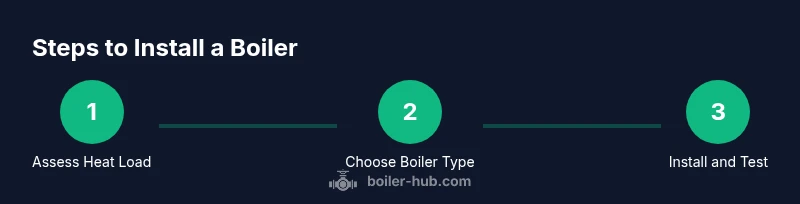
- 1
Assess heat load and select boiler type
Gather home dimensions, insulation quality, window efficiency, and climate data. Use this to estimate annual heating demand and correct boiler size. Compare combi, system, and conventional layouts to match your daily hot water and space-heating needs.
Tip: Document insulation gaps and occupancy patterns to improve sizing accuracy. - 2
Choose fuel and boiler configuration
Decide between gas, oil, electricity, or biomass, considering availability and long-term costs. Choose a layout (combi, system, conventional) that aligns with water use, space, and existing plumbing.
Tip: Factor future efficiency improvements or service accessibility into your choice. - 3
Plan location, venting, and room design
Select a safe, accessible location with adequate clearance for service and venting. Verify vent size, draft, and combustion air supply. Ensure the area remains free from flammable materials and follow local clearance requirements.
Tip: Pre-assemble piping routes and verify that clearances comply with manufacturer specs. - 4
Install or prepare piping and connections
Lay out supply and return lines, install wall brackets, and ensure leak-free joints. Install the heat exchanger, pump, expansion tank, and safety devices per manufacturer instructions. Perform a thorough inspection before filling the system with water.
Tip: Use thread sealant compatible with heating systems and verify all electrical connections meet code. - 5
Fill, bleed, and test the system
Fill the system with clean water, bleed air from radiators, and balance the circuit to ensure even heat. Test pressure, check for leaks, and confirm safe combustion with the exhaust system. Calibrate controls for reliable startup.
Tip: Record pressure readings and ensure relief valves are functioning. - 6
Program controls and optimize efficiency
Set thermostat schedules, connect zoning if available, and enable night setbacks to reduce energy use. Consider a smart thermostat for smarter energy management and remote monitoring. Schedule the first professional service after 6–12 weeks of operation.
Tip: Avoid over-pressurization and keep an eye on fuel usage trends to catch issues early. - 7
Schedule ongoing maintenance
Plan annual servicing for burners, heat exchangers, and safety devices. Replace worn gaskets and check pressure and expansion tank status. Maintain clear access for future service and keep dust-free around the boiler.
Tip: Set recurring reminders for service appointments to protect performance and safety.
Questions & Answers
What is the difference between a combi boiler and a system boiler?
A combi boiler provides instant hot water without a separate cylinder, while a system boiler stores hot water in an internal or external cylinder. System boilers are better for homes with higher hot water demand and multiple bathrooms.
A combi boiler gives instant hot water and heating from one unit; a system boiler uses a separate hot water cylinder for storage, which is better for higher hot-water needs.
How do I know if my boiler is correctly sized?
Sizing should balance heating load with available space and fuel. An oversized boiler cycles frequently; an undersized unit struggles to heat the home. A professional heat-load calculation ensures accuracy.
Get a professional heat-load calculation to ensure the boiler matches your home's needs and avoids wasted energy.
What maintenance does a boiler need annually?
Annual service typically includes burner inspection, heat-exchanger cleaning, safety device testing, pressure checks, and venting inspection. Regular maintenance reduces breakdowns and improves efficiency.
Have a pro service your boiler each year to keep it safe and efficient.
Is it worth upgrading to a condensing boiler?
Condensing boilers recover waste heat from exhaust and can significantly improve efficiency, often justifying higher upfront costs over time through energy savings.
Condensing boilers use waste heat to improve efficiency and save on fuel over the long term.
Can I install a boiler myself?
Boiler installation involves gas connections, venting, and electrical work that require licensing in many areas. Check local codes and consider hiring a licensed professional for safety and warranty.
Check local rules and consider a licensed installer for safety and warranty.
Watch Video
Key Points
- Size the boiler to match heat load for comfort and efficiency
- Choose fuel and boiler type based on home, budget, and future plans
- Plan proper venting, combustion air, and safety devices
- Schedule regular maintenance to sustain performance