BPVC Guide: Boiler and Pressure Vessel Code Comparison
Analytical comparison of BPVC Sections I and VIII for boilers and pressure vessels, with practical guidance for homeowners and facility managers on compliance, inspections, and best practices.


BPVC, or Boiler and Pressure Vessel Code, provides the essential safety standards for designing, fabricating, inspecting, and testing boilers and pressure vessels. It helps ensure reliability and regulatory compliance across jurisdictions. For most facilities, the main decision is whether to follow Section I for power boilers or Section VIII for pressure vessels, with Section III and IX addressing specialized cases. This choice shapes risk management, maintenance scheduling, and long‑term asset performance.
The BPVC Landscape and Why It Matters
The boiler and pressure vessel code (BPVC) is a comprehensive framework developed to standardize how boilers and pressure vessels are designed, built, inspected, and maintained. Its primary aim is safety—reducing the risk of catastrophic failure, unplanned outages, and injuries in facilities that rely on steam, hot water, or compressed fluids. According to Boiler Hub, adopting the BPVC creates a consistent baseline that aligns engineering practice with regulatory expectations, insurance requirements, and manufacturer warranties. For homeowners with heat systems and facility managers overseeing large plants, the BPVC represents a practical map for ensuring that equipment operates within acceptable pressure and temperature limits. The code also supports long‑term asset performance by mandating documentation, traceability, and verifiable testing. In short, the boiler and pressure vessel code is not just a bureaucratic hurdle; it is a knowledge framework that translates safety science into everyday operation. Understanding its scope helps teams plan upgrades, service contracts, and training programs with confidence. This article uses a comparison approach to explain how Sections I and VIII, among others, shape real-world decisions and investment strategies for boilers and pressure vessels across industries.
Core Principles: Design, Fabrication, and Evaluation
At its heart, BPVC establishes three intertwined pillars: design, fabrication, and evaluation. Design rules cover material selection, allowable stresses, and safety margins that prevent brittle failure or overpressure events. Fabrication rules govern welding procedures, heat treatment, nondestructive testing, and documentary controls that prove a vessel was built to the required standard. Evaluation focuses on periodic inspection, performance testing, and assessment of service conditions to ensure continued compliance. For practitioners, the core takeaway is that safe operation depends on rigorous adherence to specification, qualification of personnel, and robust quality control. Although it can seem onerous, the discipline embedded in the BPVC directly translates to fewer unexpected shutdowns, longer service life, and more predictable maintenance planning. Boiler Hub’s guidance emphasizes that a well‑structured BPVC program reduces risk while improving asset reliability and performance. As equipment ages or service demands change, the BPVC framework provides a clear path for re‑certification and necessary upgrades, so facilities stay in step with evolving safety expectations and industry best practices.
Key Sections: I vs VIII and III, IX
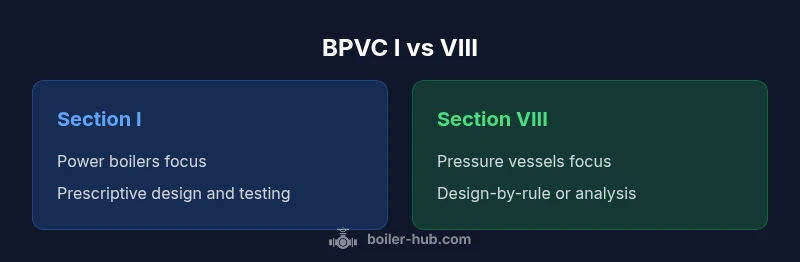
Three sections dominate the everyday decision tree for boilers and vessels: Section I (Power Boilers), Section VIII (Pressure Vessels), and related sections such as Section III (Nuclear-Grade Equipment) and Section IX (Welding and Brazing Qualifications). Section I is designed for boilers delivering high‑pressure steam or hot water, typically in power generation or district heating contexts. Section VIII addresses pressure vessels that store or process fluids under pressure, across a wide array of industries—from chemical processing to food manufacturing. While Section I emphasizes power boiler design and test requirements, Section VIII offers two pathways: design-by-rule and design-by-analysis, each with its own validation and inspection demands. The choice between I and VIII depends on the equipment’s function, pressure‑temperature regime, and the risk tolerance of owners and regulators. For facilities dealing with mixed equipment, engineers often operate under both sections with careful coordination to avoid conflicts in design intent or inspection frequency. Boiler Hub notes that understanding these sections early reduces scope creep and helps teams align procurement, fabrication, and commissioning activities with the appropriate BPVC pathways.
Compliance Pathways and Jurisdiction
Regulatory alignment for BPVC varies by country, state, and local authority. In many jurisdictions, compliance is driven by boiler room safety regulations, insurance requirements, and facility licensing procedures. While the BPVC sets the technical baseline, inspectors and authorities often follow a parallel framework such as the NBIC (National Board Inspection Code) to govern field inspection, performance verification, and repair procedures. The NBIC complements BPVC by standardizing the inspection process, ensuring that welds, pressure tests, and safety devices meet consistent quality criteria. The relationship between BPVC and jurisdictional rules means owners must stay current with code editions, ensure that contractors and fabricators hold recognized qualifications, and maintain traceable documentation for audits. Boiler Hub emphasizes coordinating design, fabrication, and inspection calendars with local authorities to avoid delays and ensure that equipment remains compliant throughout its service life.
Common Pitfalls and Enforcement Challenges
A frequent challenge is misinterpreting the scope of BPVC for a given piece of equipment. Some owners apply the wrong section, leading to unnecessary redesigns or missed inspections. Others rely on outdated editions, creating a compliance gap when newer safety features or testing methods become mandatory. In some cases, facilities assume that a simple repair constitutes full compliance, which is not true if the original design assumptions or materials no longer meet current requirements. Enforcement can vary by jurisdiction, which means a plan that works in one locale might require adjustments elsewhere. Boiler Hub stresses the importance of ongoing training for engineers and technicians, maintaining current design documents, and engaging qualified inspectors who understand both BPVC and NBIC processes. When in doubt, opt for formal confirmation from the relevant authority or a certified inspector to avoid compliance risk and costly retrofits later.
Practical Steps to Implement BPVC in a Facility
Start with a comprehensive equipment inventory, listing each boiler and pressure vessel, its service, and its current operating conditions. Map each item to the BPVC sections that apply—usually Section I for power boilers and Section VIII for pressure vessels—and confirm whether a design-by-rule or design-by-analysis approach is needed. Engage a certified inspector or a qualified third party early to review drawings, weld procedures, and NDT plans. Gather all design calculations, material specifications, welding qualifications, heat treatment records, and testing results, then create a centralized document package that can be audited and updated. Implement a formal maintenance plan that includes regular inspections, pressure tests, and re-certification timelines. Train operations and maintenance staff on the BPVC requirements, particularly around safety devices, relief valves, and emergency shutdown procedures. A successful BPVC program relies on repeatable processes, clear ownership, and disciplined record keeping. Boiler Hub’s recommended workflow emphasizes alignment between engineering design, fabrication, and field verification to ensure seamless compliance across the equipment lifecycle.
The Cost and Time Implications of BPVC Compliance
Compliance with the boiler and pressure vessel code affects both upfront project timing and ongoing operating expenses. Expect longer design and construction phases for new or refurbished boilers and vessels, driven by the need for validated calculations, qualified weld procedures, and pre‑certification testing. Ongoing costs include scheduled inspections, non‑destructive testing, and periodic re-certification as equipment ages or service conditions change. While these costs can be substantial, they are weighed against the risk of noncompliance, operational downtime, or safety incidents, which carry much higher potential risk and expense. Boiler Hub notes that a well‑structured BPVC program delivers long‑term value by reducing unplanned outages and extending equipment life through proactive maintenance and robust documentation. For facilities weighing the economics, a risk‑based approach to inspection and a phased implementation plan can help balance safety, reliability, and budget constraints.
Quality Assurance and Documentation
A robust BPVC program rests on quality assurance and meticulous documentation. Central elements include design calculations, material qualifications, welding procedure specifications, heat treatment records, testing protocols, and inspection reports. Maintaining an auditable trail helps demonstrate compliance during regulatory reviews or insurance assessments. Regular internal audits and third‑party verifications support continuous improvement, identify gaps, and ensure that procedures remain aligned with BPVC editions and NBIC guidelines. The emphasis on traceability and repeatability makes it easier to scale maintenance programs as facilities grow or modify processes. Boiler Hub highlights that QA documentation is not merely a compliance artifact; it is a live asset that informs safety decisions, training needs, and future capital projects. Sustained diligence in documentation translates into higher confidence among operators, inspectors, and stakeholders.
Industry Trends and Boiler Hub's Guidance
The BPVC landscape continues to evolve with trends toward harmonization, risk‑based inspection, and digital recordkeeping. Modern facilities increasingly adopt risk‑based approaches to inspection scheduling, focusing resources on areas with the greatest likelihood of failure. Digital documentation platforms enable real‑time updates to design packages, inspection results, and corrective actions, improving visibility for managers and inspectors. Boiler Hub’s guidance consistently emphasizes proactive planning, cross‑functional collaboration, and ongoing education for teams. As new materials, welding techniques, and testing methods emerge, staying current with BPVC editions and NBIC updates becomes essential. The core message is clear: the boiler and pressure vessel code remains the backbone of safe operation, and forward‑looking facilities treat code compliance as a continuous journey rather than a one‑time milestone.
Comparison
| Feature | BPVC Section I (Power Boilers) | BPVC Section VIII (Pressure Vessels) |
|---|---|---|
| Scope and main applications | Power boilers for steam/hot water in heating plants and power generation | Pressure vessels for storage/processing across many industries |
| Design and fabrication requirements | Prescriptive design with mandatory safety features and testing | Design-by-rule or design-by-analysis with NBIC oversight |
| Inspection and testing | Initial inspection and mandatory testing during commissioning | Periodic inspections with NBIC processes and possible risk-based elements |
| Material and welding standards | Stringent material and weld procedures per Section I | Material qualifications and welding standards per Section VIII (and related sections) |
| Best for | New or existing power boilers, high‑pressure steam systems | Industrial vessels across chemicals, oil, gas, and manufacturing |
| Cost and time to compliance | Higher upfront design and testing costs | Variable costs depending on vessel size, service, and complexity |
Advantages
- Strengthens safety and reliability across facilities
- Facilitates regulatory acceptance and audits
- Standardizes design, fabrication, and inspection processes
- Improves asset resale value and insurance alignment
The Bad
- Requires significant upfront investment and scheduling
- Can limit design flexibility and rapid modification
- Ongoing inspections and re-certification add recurring costs
- Complexity from multiple BPVC sections may confuse small operations
Adopt BPVC-compliant pathways; Section I for power boilers and Section VIII for pressure vessels
Using the BPVC provides a safety-first, standards-aligned framework. Section I is best for power boilers, Section VIII for pressure vessels. Agencies and insurers typically prefer documented compliance and verified testing, which this approach supports.
Questions & Answers
What does the boiler and pressure vessel code cover?
BPVC covers design, fabrication, testing, and inspection of boilers and pressure vessels. It provides safety criteria, material requirements, welding standards, and inspection protocols to ensure reliable operation and regulatory compliance.
BPVC covers how boilers and pressure vessels should be designed, built, tested, and inspected to keep operations safe and compliant.
Which BPVC sections apply to boilers and to vessels?
Section I covers power boilers, Section VIII covers pressure vessels. Other sections address welding, materials, and specialized applications. Always verify the specific section based on equipment function and jurisdiction.
Section I is for power boilers; Section VIII is for pressure vessels; other sections cover related topics.
Is BPVC compliance mandatory in every state?
Compliance requirements vary by jurisdiction. Many places require adherence to BPVC or equivalent local rules, often coupled with NBIC inspections. Check with local authorities and insurers to confirm exact obligations.
It depends on where you are; many areas require BPVC alignment or an equivalent standard.
How often are BPVC inspections required?
Inspection frequency is defined by the relevant BPVC provisions and NBIC guidelines. Typical practice includes periodic inspections and post‑maintenance verification, with more stringent regimes for high‑risk equipment.
Inspections are regular and determined by the code and local rules.
What is the difference between Section I and Section VIII?
Section I applies to power boilers with prescriptive design and testing rules. Section VIII governs pressure vessels and offers either design‑by‑rule or design‑by‑analysis routes, focusing on pressure containment safety.
Section I is for power boilers; Section VIII is for pressure vessels.
How should an organization begin BPVC implementation?
Begin with a comprehensive inventory and determine applicable sections, engage certified inspectors, collect design and test data, and implement a formal QA and documentation program to support ongoing compliance.
Start with inventory, then get experts to review and document everything.
Key Points
- Define BPVC scope early in project planning
- Engage qualified inspectors and fabricators
- Maintain thorough, auditable documentation
- Choose Section I for power boilers and Section VIII for vessels
- Treat code compliance as a continuous program, not a one-off task